Monday Reset: The Pantry That Makes Weeknights Easier
September 14, 2026
On a Monday, I do not want the pantry to ask more of me than the evening already will. I want it to help. I want to open the door and see the things we actually cook with, not a collection of categories that only makes sense if I have extra time and a clear head. Weeknights are rarely built out of extra time.
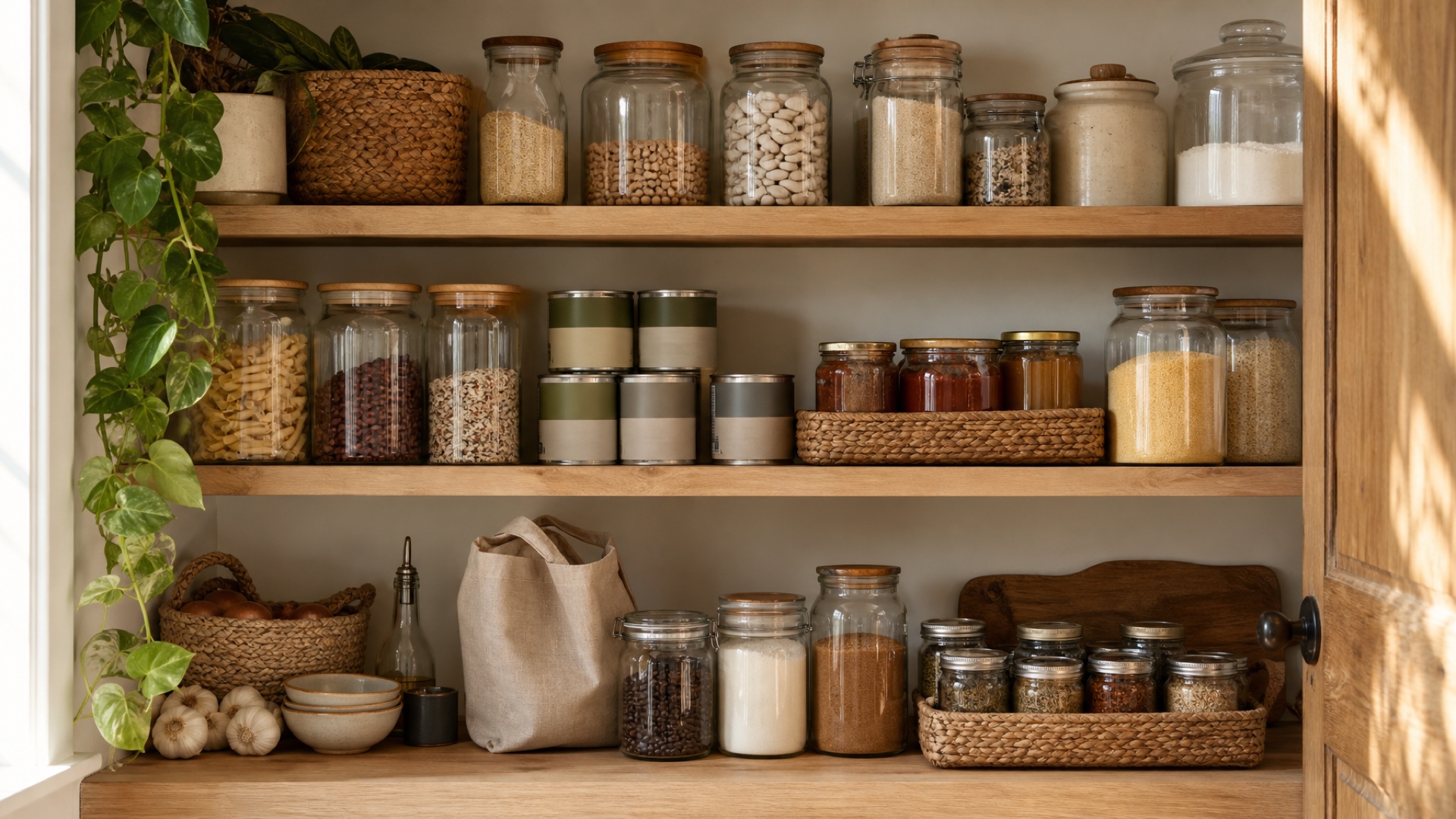
What I want from a pantry is not drama. I want readability. I want to know where the coffee lives because it needs to be close to where it gets used. I want the rice, beans, broth, and spices grouped in a way that makes dinner feel nearer. I want the baking essentials where I can find them without digging when somebody wants to make something from scratch. A pantry should not slow the house down before the meal even begins.
What I want it to do
I do not need a pantry that performs for the camera. I need one that makes the next meal easier to begin. If the shelves tell the truth about how we live, I can move through them faster and with less friction. That matters on the nights when everyone is hungry, the day has already been full, and I still want dinner to feel like care instead of another burden.
The meals that depend on this kind of pantry are not complicated ones. Taco bowls. Grilled chicken. Roasted vegetables. Salads with something bright on top. Simple breakfasts that do not require a full production. A dessert in a pan when the evening needs something sweet and easy. Those are the kinds of meals this pantry needs to support. It is not there to impress anyone. It is there to help real food happen.
The categories that matter
I like a pantry best when the categories are obvious enough that I do not have to think twice. Coffee near the place it gets poured. Rice and beans together because they belong to the same kind of practical dinner. Broth and spices close enough to reach in one motion. Baking essentials where I can see them before I decide whether there is time to make something. The point is not to decant every item or label every shelf just because it looks tidy. The point is to make the useful things easy to reach.
That also leaves room for the pantry to do what it does quietly in a real house. It gives breakfast a starting place. It helps lunch happen when the day is moving quickly. It keeps weeknight dinner from beginning with a hunt. In other words, it supports the rhythm of the house without demanding that the house slow down for it.
When it stops working
A pantry usually tells me when it is no longer working. I start reaching past the things I use most. I forget what we have. Something simple becomes harder than it should be. That is usually when I know I need to shift a basket, move a category, or put the everyday things somewhere more honest. I do not read that as failure. I read it as information.
A pantry is not a museum. It is a working part of the home. If the way we cook changes, the pantry may need to change too. If the season shifts and the meals shift with it, the shelves should probably reflect that. A useful system is allowed to be adjusted. It is allowed to be ordinary. It is allowed to help a real family on a real Monday night without looking perfect first.
That is what I want from the pantry at the start of a week. Not perfection. Just a quiet kind of readiness that says we can make something, and we can make it without making the whole evening harder than it needs to be.
With love and intention,
Jennifer