
How the Matrix Works
The Matrix is a structured placement system used to organize member and distributor positions within Botanic.
It is designed to keep placement orderly, predictable, and connected to the sponsoring distributor’s own organization. The matrix does not guarantee earnings, income, bonuses, spillover, or business results. Matrix commissions, when available, are paid only according to the Compensation Plan and only to active, commission eligible distributors who meet the current qualification requirements.
What Is the Matrix?
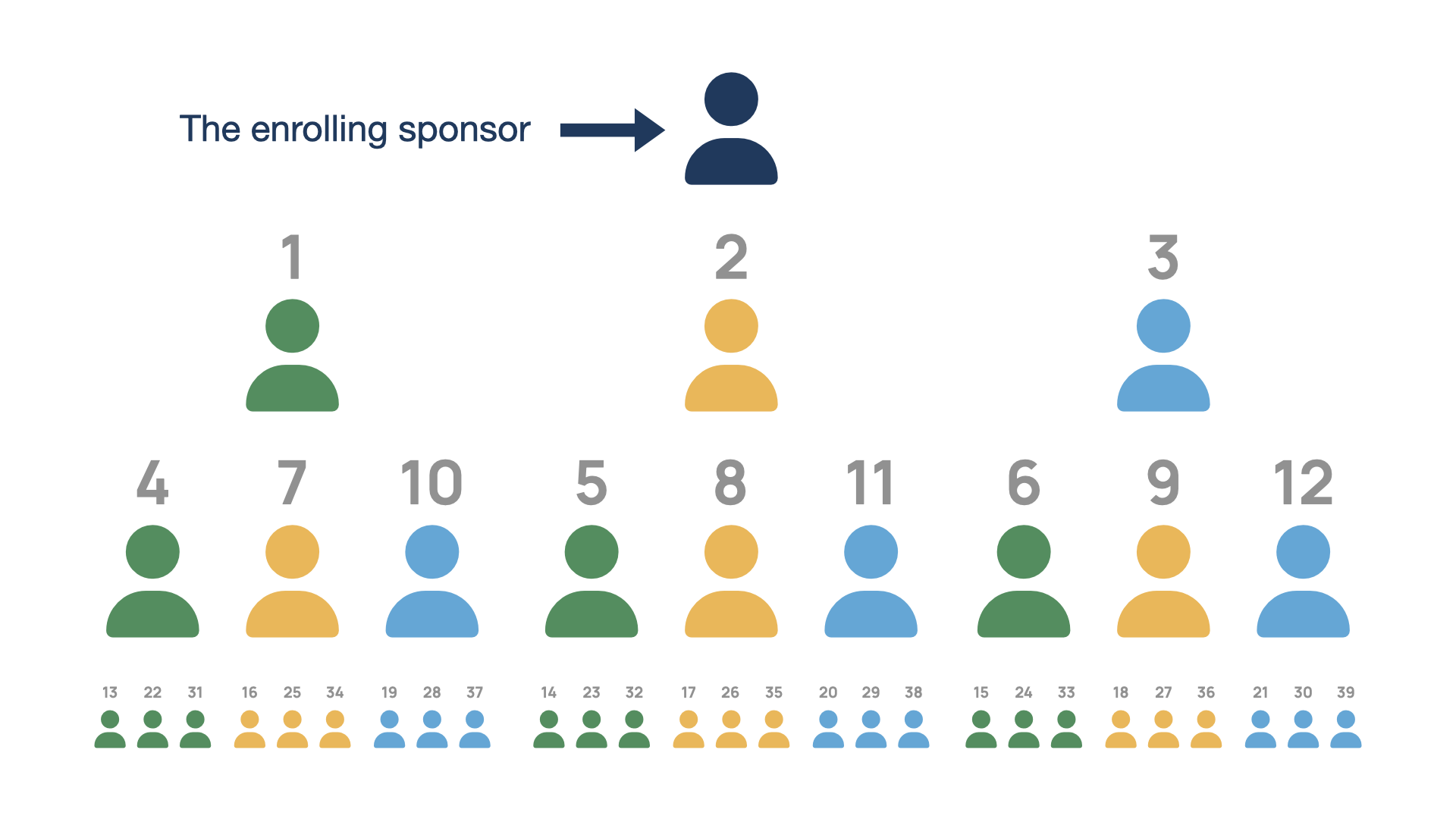
The Matrix is a 3-wide and 7-deep structure.
That means each position may have up to 3 positions directly beneath it on the next level. Once those 3 front-line positions are filled, the matrix continues growing downward in a balanced, top-down pattern. The Matrix is 7 levels deep.
In simple terms:
- Each position may have up to 3 positions across the front line.
- Once a row fills, the system continues placing new positions into the next available open spot below.
- Placement stays within the appropriate sponsor’s matrix organization.
- The matrix may contain both members and distributors.
- Only qualified, active distributors are eligible to receive matrix commissions.
Placement Starts Inside the Sponsor’s Own Matrix
When a new person is placed into the matrix, the system begins from the sponsoring distributor’s matrix position and searches for the next available open spot inside that sponsor’s own matrix organization.
This means placement stays within that sponsor’s organization.
The system does not search the entire company for a random opening. It does not move people into unrelated matrix teams. It places each new position according to the structured placement rules inside the sponsor’s own matrix subtree.
Front-Line Positions Fill First When Available
If the sponsor’s first level still has open positions, new placements are placed there first.
Because the matrix is 3-wide, the first level can hold up to 3 positions.
If there is room on the first level, placements fill:
- The first open spot on Level 1
- The next open spot on Level 1
- The third open spot on Level 1
Once those front-line positions are full, the system continues placing new positions into the next available position below.
What Happens If Spillover Already Filled a Front-Line Spot?
Sometimes, a distributor’s front-line spots may already be filled because of prior placement activity in the matrix.
When that happens, a personally sponsored enrollment does not override the existing structure.
Instead, the new enrollment is placed into the next available open position inside that sponsor’s matrix organization.
The simple rule is:
Personally sponsored enrollments do not displace, replace, or override existing matrix positions. They are placed into the next available open position within the sponsor’s matrix organization.
Placement Stays Balanced After the Front Line Is Full
After the first level is full, the system continues filling the matrix in a balanced, top-down pattern.
The matrix is designed to move across a row before going deeper into the structure. This helps prevent one leg from filling deeply while other nearby open positions remain empty.
For example, after the first 3 front-line spots are full, the next placements move into the next row in order, across that level, before continuing farther down.
So the way it works for Level 2 is:
First spillage goes to the first 1 spot on the first leg
Second spillage goes to the first 1 spot on the second leg
Third spillage goes to the first 1 spot on the third leg
Fourth spillage goes to the first 2 spot on the first leg
Fifth spillage goes to the first 2 spot on second leg
Sixth spillage goes to the first 2 spot of the third leg
Seventh spillage goes to the first 3 spot on the first leg
Eighth spillage goes to the first 3 spot on second leg
Ninth spillage goes to the first 3 spot on the third leg
If a spot is already occupied because of a personally sponsored placement, the system skips that filled spot and goes to the next branch to seek out the next available position.
This creates a more organized structure and helps the matrix grow in a predictable pattern.
One Matrix Position Per Distributor
Each distributor may hold one matrix position.
This helps keep the structure clean, traceable, and consistent. A distributor’s matrix position is tied to that distributor’s account and is subject to the company’s current account, eligibility, and compensation rules.
Members and Distributors in the Matrix
The matrix may contain both:
Members
Distributors
However, not every person in the matrix is eligible to receive matrix commissions.
Members may participate as customers and may hold a place in the matrix structure, but customer members do not receive commissions.
Only distributors who meet the active and commission-eligible requirements may receive matrix payouts.
Who Can Receive Matrix Pay?
To receive recurring matrix commissions, a distributor must meet the company’s current eligibility requirements.
The system checks whether the person is:
A distributor
Currently active
In an active matrix position
Not removed from the live matrix
Currently commission eligible under the system’s live eligibility rules
In practice, recurring matrix payout eligibility is primarily driven by current active status and PV-based qualification requirements, along with the live eligibility checks built into the system.
Being placed in the matrix does not automatically create a commission. A distributor must remain active and commission eligible to receive any matrix compensation.
What Happens If Someone in the Line Is Not Payable?
If a person above a payout position is inactive, not qualified, or otherwise not payable, the system does not necessarily stop the payout at that position.
Instead, the matrix payout logic may skip non-payable positions and continue upward to the next eligible, payable distributor according to the compensation rules.
This helps ensure matrix payout logic is based on active eligibility, not simply placement alone.
What Happens When Someone Goes Inactive?
If someone becomes inactive, they are not immediately removed from the matrix.
The current system provides a 31-day grace period.
During the grace period:
- The person keeps their matrix position.
- The person is not payable for matrix commissions while inactive or unqualified.
- If they reactivate within the grace period, they keep their existing place.
- Their position remains part of the live structure during the grace period.
The grace period gives inactive participants time to restore active status without immediately losing their matrix position.
What Is Matrix Flushing?
If a person remains inactive beyond the grace period, the system may flush that matrix position from the live matrix.
In practical terms, flushing means:
- The inactive position is removed from the active matrix structure.
- The gap is closed by moving descendants upward.
- The flushed person does not keep their former active matrix seniority.
- If they return later, they return with new bottom seniority based on their new placement.
Flushing keeps the live matrix focused on active participation and helps prevent inactive positions from permanently holding space in the structure.
Important Compliance Reminder
The matrix is a placement and compensation structure. It is not a guarantee of earnings, income, spillover, rank advancement, or business success.
Matrix commissions depend on many factors, including active status, qualification, customer and distributor activity, compensation plan rules, and system eligibility checks.
No distributor should represent the matrix as guaranteed income, passive income, automatic spillover, or a promise of financial results. Any discussion of earnings must be truthful, typical, substantiated, and consistent with company policies.
Simple Summary
The Matrix is designed to:
- Keep placement inside the sponsor’s own organization
- Fill open positions in a structured, balanced way
- Preserve one position per distributor
- Allow members and distributors to be organized in the matrix
- Pay only active, eligible distributors according to the compensation plan
- Move past non-payable positions when required by the payout logic
- Protect the structure from long-term inactive positions through grace-period and flushing rules
The matrix provides structure, but participation, qualification, and compensation are always governed by the official Compensation Plan, current eligibility rules, and company policies.