November 18, 2026
A crowded kitchen does not always need more storage. Sometimes it needs fewer steps. During a large cooking session, the cutting board fills, the sink acquires peelings, and the person carrying scraps across the room meets the person carrying a hot pan. A temporary waste station can keep those paths from crossing.
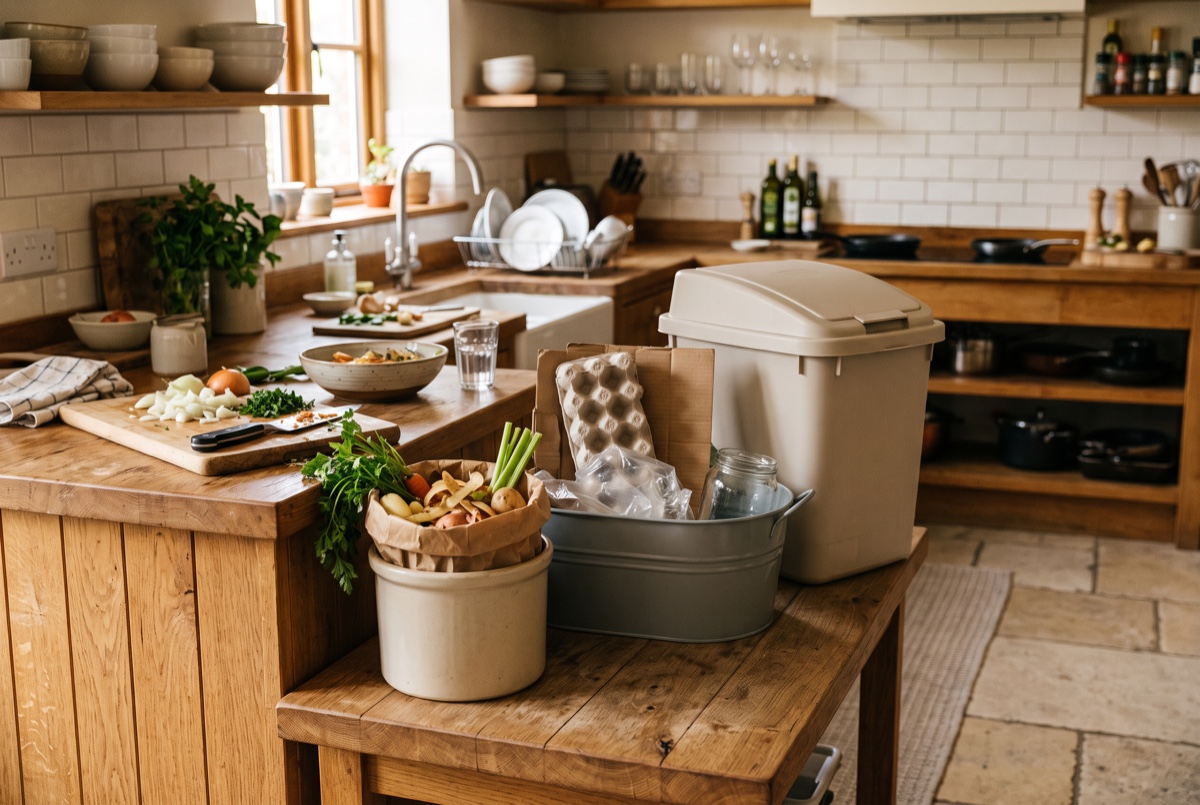
This is not a second permanent trash can and not an invitation to leave food waste out indefinitely. It is a short-lived work zone for one cooking project, placed where the work is happening and cleared when the work is done.
Choose the right container
Use a stable container that is easy to carry and clean. A small lined bin works for dry packaging and ordinary kitchen waste. A bowl or countertop compost caddy may suit vegetable trimmings if that is how your household handles food scraps. Keep raw meat packaging, leaking materials, and anything requiring special disposal separate according to local guidance.
Do not use a beautiful but delicate serving bowl if a knife, hot pan, or wet peel can damage it. The temporary station should be sturdy, washable, and unambiguous. You should be able to tell at a glance what belongs there.
Put it beside the work, not beside the door
Place the container within one easy reach of the cutting board, but not where it can be knocked by an elbow or catch a handle. Leave a clear path to the sink and stove. If the counter is crowded, put the station on a stable nearby surface at a height that does not require bending over repeatedly.
Keep the container away from heat, flames, hot pans, and electrical equipment. Do not block appliance vents, exits, or the place where someone needs to set down a hot dish. A waste station only saves time if it does not create a new hazard.
Use a two-part setup when it helps
For a meal with both packaging and food scraps, use two clearly separate containers. Dry packaging can go in one lined bin while vegetable trimmings go in another. This prevents a wet peel from soaking a paper package and reduces sorting later.
Keep towels, cleaning cloths, and food-contact tools separate from waste containers. Wash your hands after handling raw animal products and after moving waste. Clean and sanitize food-contact surfaces according to the product directions and household food-safety guidance when contamination occurs. A waste station is a workflow aid, not a substitute for hygiene.
Give it a closing time
Clear the station as soon as the cooking session ends, or sooner if it becomes full, wet, warm, or unpleasant. Tie and remove the liner according to your household waste routine. Empty food scraps into the appropriate collection or outdoor container, following local requirements. Wash the container with a suitable method and let it dry before storing it.
Do not leave food waste sitting on the counter overnight. Keep the area clean and address leaks promptly. If pests, odors, or repeated spills are a problem, change the container, liner, location, or disposal interval rather than accepting the nuisance as part of cooking.
Notice what the station teaches you
After the kitchen is clear, ask which trips disappeared. Did the chopping zone need a scrap bowl? Did packaging accumulate near the pantry? Did the sink become the only place to put everything? One cooking session can reveal a better arrangement for the next one without requiring a renovation or a new organizer.
Pay attention to the moment the station stopped helping. If the bowl filled too quickly, the batch may need to be divided. If the bin attracted drips, it may need a better liner or a washable tray underneath. If people kept putting clean utensils into it by mistake, its location or shape was too ambiguous. These are practical observations, not evidence that anyone cooked incorrectly.
For a meal involving several people, say what each container is for before the work begins. A short instruction can prevent a surprising amount of sorting later, especially when one person is chopping and another is clearing packaging. Keep the arrangement visible and simple enough to survive a busy conversation.
Sometimes the answer is a permanent tool. Often it is simply remembering to put out one bowl before the first onion is peeled. Good homekeeping is full of these temporary decisions. They make a busy hour easier without asking the room to become a different room.
Keep the station temporary
When the meal is finished, return the counter to its ordinary purpose. The bowl goes away, the bin leaves the work zone, and the kitchen is ready for its next use. The value was never in adding another object to the room. It was in bringing the right object close for exactly as long as it was needed.