How to Clean Outdoor Furniture by Material
August 29, 2026
Outdoor furniture often looks like one washable object, but a single chair may combine a coated metal frame, stainless hardware, synthetic sling fabric, plastic glides, and a removable cushion. A strong all-over spray can reach every part while still being appropriate for none of them.
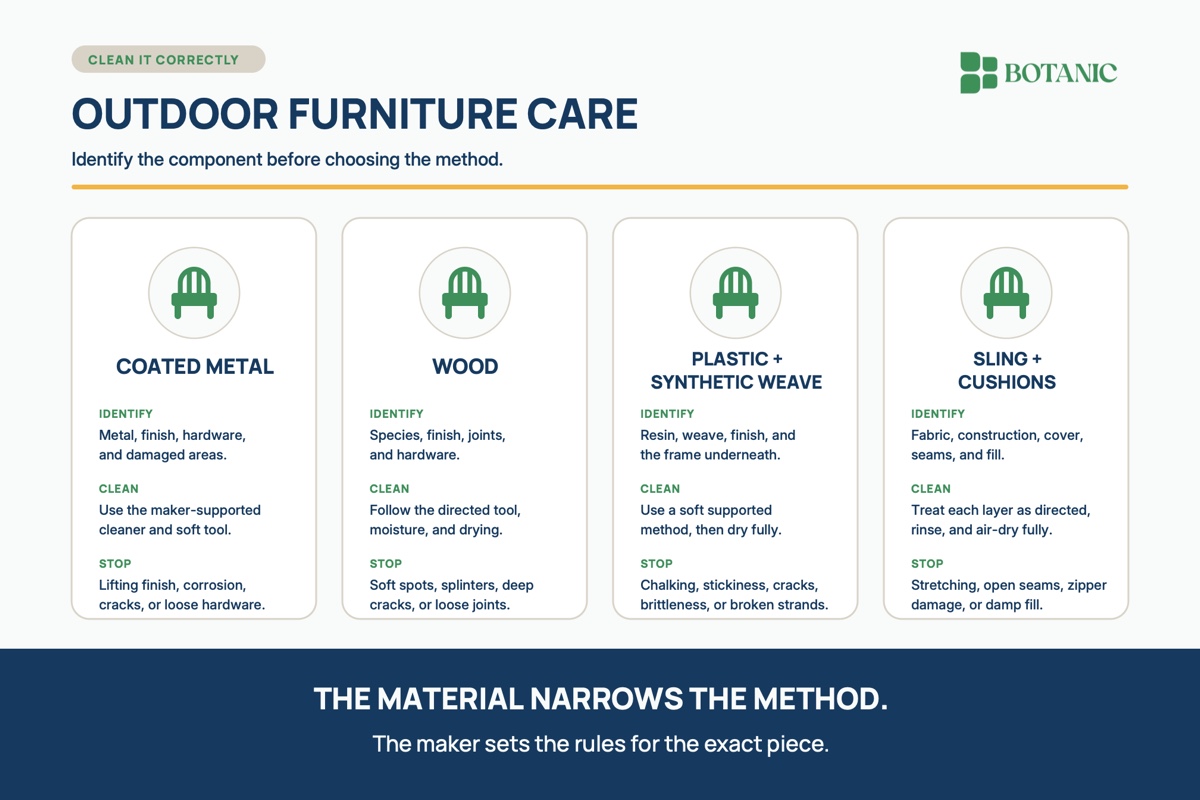
Start by mapping the piece instead. Identify the frame, finish, hardware, woven or sling material, cushion fabric, inner fill, and any removable covers. Then use the exact maker’s care instructions for each component. Material names narrow the possibilities, but they do not replace the directions for the furniture you own.
Inspect the whole piece before introducing water
Look underneath the seat, along the frame, and inside cushion seams for a brand label, model name, material tag, or care label. Check the current manufacturer’s website if the paper guide is gone. Record the information for the frame and textiles separately because one set of directions may not cover both.
Brush or vacuum away loose leaves, grit, pollen, and cobwebs while the furniture is dry. This reveals chipped coating, rust, split wood, loose joinery, cracked plastic, broken weave, stretched sling fabric, open seams, failing zippers, damp cushion fill, or unstable legs. Cleaning should pause when the piece is not sound enough to use or move safely.
Set up on a stable surface where you can work without lifting more than you can manage. Close or lock folding parts as the maker directs. Keep children and pets away from the work area and from wet furniture until every product has been put away and the piece is dry.
Coated metal needs its finish treated as a separate material
Aluminum, steel, wrought iron, and stainless steel may appear together in outdoor collections, but the metal name is only part of the decision. A painted or powder-coated surface has a finish that can be scratched, dulled, or opened to corrosion. Hardware and welds may have different care limits from broad frame surfaces.
After dry soil is removed, follow the exact directions for cleaner, dilution, cloth or brush, rinsing, and drying. Use gentle pressure and keep water out of open tubing or damaged joints. Do not assume that a pressure washer, abrasive pad, metal polish, rust treatment, wax, spray coating, or touch-up paint is suitable. Those are product-specific maintenance or repair choices.
Stop if the coating lifts, color transfers, corrosion appears under a finish, a weld is cracked, or hardware is loose. Dry the frame and joints as directed before replacing cushions or folding the piece for storage.
Wood care depends on species, finish, and the result you want
Teak, eucalyptus, acacia, and other outdoor woods can weather differently, and the same species may be sold unfinished, sealed, oiled, stained, or painted. A silvered surface is not automatically dirty, and a darker patch is not automatically a stain that should be scrubbed away.
Identify the wood and finish before choosing a wet method. Use only the maker-supported cleaner, tool, grain direction, rinse, drying time, and maintenance treatment. Keep water from sitting in joints, end grain, checks, or hardware recesses. Do not sand, oil, brighten, bleach, seal, or pressure-wash the wood unless the exact directions call for that process and you understand how it will change the appearance.
Pause for soft spots, splinters, lifting finish, deep cracks, loose joints, darkening that returns after drying, or hardware that stains the surrounding wood. Those clues may need repair or product-specific service rather than another cleaning pass.
Plastic, synthetic resin, and woven surfaces are not interchangeable
Outdoor plastic may be injection-molded, high-density polyethylene lumber, fiberglass-reinforced material, or another resin. Wicker-look furniture may be a synthetic weave wrapped around a separate frame. A cleaner that suits one plastic can affect another material, printed mark, finish, or hidden frame.
Use a soft tool and the manufacturer-supported solution after loose grit is gone. Clean woven surfaces in the direction and with the moisture level the maker permits, paying attention to overlaps and the frame beneath them. Rinse only when directed and let the piece drain and dry fully.
Skip solvents, abrasive powders, melamine foam, stiff brushes, heat, steam, and high-pressure washing unless the exact directions explicitly allow them. Stop for chalking, stickiness, brittleness, cracking, whitening, unraveling, broken strands, or movement between the weave and frame.
Separate sling fabric, cushion covers, and cushion fill
A sling is tensioned as part of the chair. A cushion is a layered object with an outer fabric, seams, zipper, fill, and sometimes a water-resistant liner. Even when two textiles share a brand name, their construction can change how they should be cleaned and dried.
Sunbrella’s current upholstery directions begin with brushing off dry debris and treating spills promptly. They also distinguish removable from non-removable fabric and tell readers to consult the furniture manufacturer before removing a casing because cushion construction varies. Its sling directions use a separate process for that application. These are useful examples of why the exact fabric and furniture directions belong together.
Remove a cover, machine-wash it, use bleach, apply a stain treatment, or add a fabric protector only when the current directions allow that exact step. Rinse as directed so residue does not remain, and air-dry every component completely before reassembly or storage. A dry-feeling cover can hide damp fill, seams, or folds.
Control the work area and the runoff
Collect loose soil before washing and use the smallest practical amount of the directed solution. Work away from storm drains, ponds, streams, garden beds, and surfaces that a cleaner could discolor. The EPA notes that water carried by municipal separate storm sewer systems is often discharged untreated into local water bodies, so local rules and the product label should guide containment and disposal.
Do not sweep residue or pour leftover solution into a storm drain. Protect adjacent plants and materials as the product directions require. If you cannot keep the cleaning method within the label, local disposal rules, and the maker’s runoff precautions, choose a controlled wipe method when permitted or postpone the work.
A six-step material-first method
- Map the piece. Identify the frame, finish, hardware, weave or sling, cushion fabric, fill, glides, and moving parts.
- Find the directions. Match the brand, model, material labels, and current care instructions to each component.
- Dry remove and inspect. Lift loose soil, then pause for instability, broken material, corrosion, open seams, or trapped moisture.
- Clean by component. Use only the supported cleaner, amount, tool, pressure, rinse, and protective measures for that material and finish.
- Control water and residue. Keep solution away from drains and sensitive areas, collect residue, and follow the label and local disposal rules.
- Dry, reassemble, and check. Let every frame, joint, weave, cover, seam, and cushion layer dry as directed before use or storage.
Let clean enough be a material-safe finish line
Outdoor furniture does not need to look new to be well cared for. A successful cleaning removes loose soil and permitted surface residue while leaving finishes intact, joints stable, textiles fully rinsed, and every component dry. Weathering, corrosion, structural looseness, broken weave, and degraded cushion fill are condition questions, not invitations to scrub harder.
When you are unsure, photograph the label and the condition before you begin. That small record makes it easier to find the right directions now and to notice meaningful changes at the next seasonal check.
With care,
Hazel