November 5, 2026
November has a way of asking for the serving pieces you forgot you owned. A larger platter appears on the menu. Someone wants the gravy boat. The baking dish that fits the side dish is behind three things that have not been used since spring. This is a good month to move the useful pieces closer to the work.
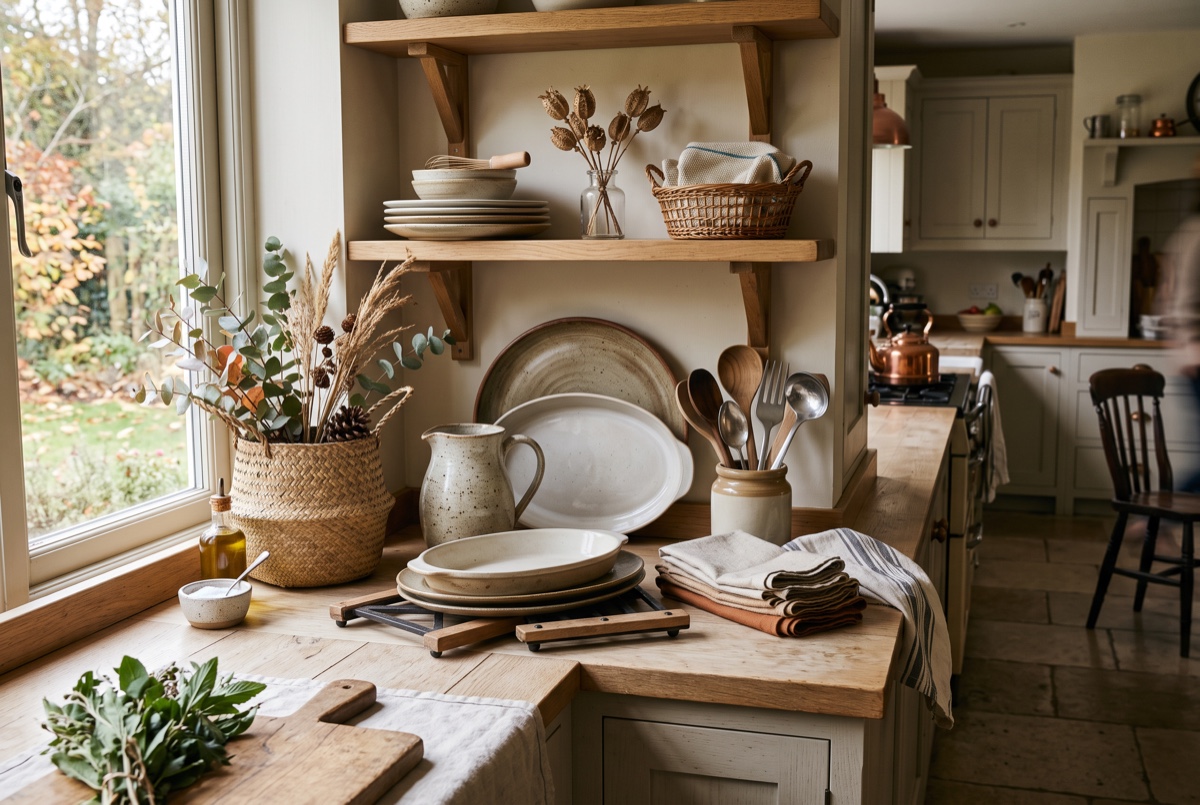
The goal is not to create a display cabinet or redesign the kitchen. It is to make the seasonal objects legible and reachable before a meal is already underway.
Start with the next few meals
Think about what November cooking actually asks of your household. You may need a roasting pan, large cutting board, casserole dishes, a soup ladle, serving spoons, a pie plate, a cake stand, or extra cloth napkins. Make a short list from real menus and gatherings, not from an imagined version of the season.
Pull those pieces together on a table or cleared counter. Inspect them for dust, chips, sticky residue, missing lids, and awkward storage. This is not a reason to discard everything that is imperfect. It is a chance to notice what needs washing, repair, replacement, or a new location.
Choose a reachable home
Heavy platters should not live at the back of a high shelf where retrieving them requires balancing on a chair. Put weighty pieces at a comfortable height, or store them vertically with sturdy dividers if the cabinet allows it. Keep handles and edges easy to grasp. A beautiful serving dish is not useful if reaching it risks a shoulder or a stack of falling ceramics.
Store pieces near their work when that is practical. Serving spoons can live near the cooking tools. Table linens may belong in a drawer near the dining area rather than in a distant bedroom closet. A pie server and cake stand can share a shelf if both are used for the same kind of occasion.
Let the shelf show you what it can hold
Do not force a storage arrangement that makes every item difficult to remove. Leave enough room for fingers and for the piece to come out without scraping its neighbors. If stacking is necessary, put the largest and least frequently moved items below, and use soft separators between surfaces that may rub.
Measure before buying a new organizer. A vertical divider, shelf riser, or shallow bin can help, but only if it fits the cabinet and supports the way you reach. More storage equipment is not automatically more order. Sometimes the improvement is simply removing one abandoned item from the front of the shelf.
Clean while the pieces are out
Wash serving pieces according to their materials and care instructions. Wipe the shelf or drawer with a suitable cleaner, using enough moisture to remove dust without soaking wood or unfinished surfaces. Allow everything to dry completely before putting it away.
For wood, silver, stone, painted surfaces, and older or handmade pieces, follow the material-specific guidance. Do not place an heirloom in the dishwasher because it was convenient. Do not use an abrasive pad on a finish you want to preserve. Homekeeping is partly the art of matching effort to the object.
Make the first reach obvious
Put the pieces you will use earliest at the front. If guests are coming, place the serving spoons and napkins where another person can find them without asking. A small label can help in a deep cabinet, but a clear arrangement is usually better than a label explaining a confusing one.
November does not need to be a storage overhaul. It only needs a little cooperation from the kitchen. When the platter is reachable, the napkins are together, and the serving spoon is not hiding behind a stack of pans, the meal can remain the main event. Put the season where your hands can find it.
With care,
Hazel