
November 4, 2026
Cloth napkins are meant to be used. They catch gravy, butter, lipstick, soup, coffee, and the small evidence of a meal that made it to the table. The trick is to wash them before those marks become a permanent memory, without treating every napkin as if it needs a complicated stain laboratory.
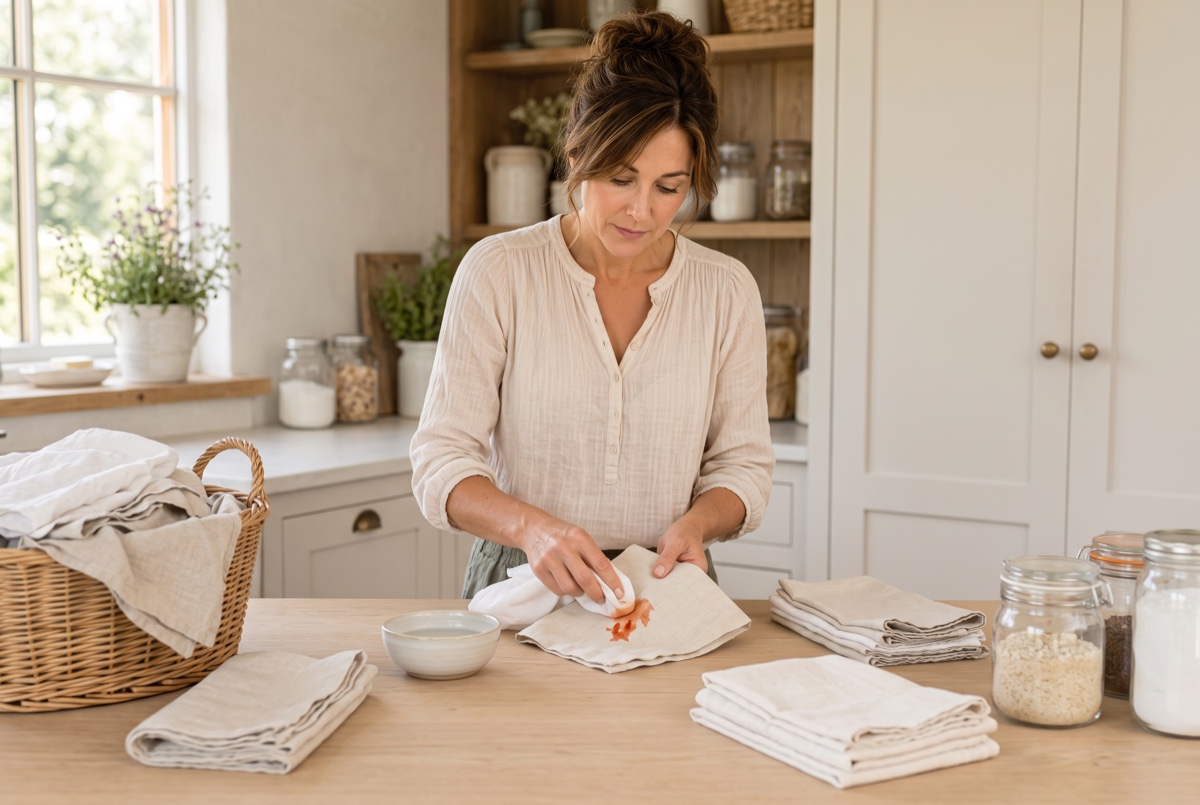
Good napkin care starts before the wash cycle. Read the care label, sort by color and fabric, and deal with the food while it is still identifiable. Linen, cotton, blends, and napkins with decorative trim may need different handling.
Remove solids before they go in the hamper
Scrape food into the compost or trash as appropriate. Do not rub a crusty mark deeper into the weave. If a napkin is damp with a sauce, unfold it so air can reach it, then either pretreat it or place it in a ventilated laundry container. A sealed pile of wet napkins can develop an odor before wash day.
For a greasy mark, blot excess oil with a clean cloth or absorbent paper. Do not put a heavily oily textile straight into a hot dryer. Heat can make a remaining stain harder to remove, and large amounts of oil on laundry can create a safety concern. Check the fabric after washing and before drying.
Match the pretreatment to the stain
Use a small amount of liquid laundry detergent or a stain product labeled for the fabric. Apply it to the mark, give it the recommended time, and avoid combining stain removers. A gentle approach is especially important for dyed linen, embroidery, and printed napkins. Test an inconspicuous area if colorfastness is uncertain.
Protein-rich stains such as egg or dairy may respond better to cool or lukewarm water at first. Hot water can set some protein stains. Other stains have different needs, so the care label and the product directions matter more than a universal rule. If the mark is old, repeated treatment may be needed.
Give the napkins room to move
Do not pack the washer until it can barely turn. Napkins need water and mechanical movement to carry away loosened soil. Wash them with similar colors and fabrics, and keep them separate from items that shed heavy lint when that matters. Turning printed napkins inside out can reduce surface wear.
Use the detergent amount recommended for the load size and soil level. More detergent is not automatically more clean. Excess product can remain in fabric, attract residue, or make rinsing less effective. A Botanic laundry product can fit naturally into this routine when its label and formulation are appropriate for the textile and the selected cycle. The label is the controlling instruction.
Choose the cycle with care
For sturdy cotton napkins, the care label may allow a regular cycle. Linen and delicate blends may need a gentler cycle, lower agitation, or a lower temperature. If a napkin has a stain that did not come out, do not move directly to the dryer. Inspect it under good light, pretreat again if suitable, and wash as directed.
Drying is part of stain care. Line drying can be gentle and gives you a chance to inspect the fabric, while a dryer may be fine when the label allows it and the stain is gone. Remove napkins promptly to reduce deep wrinkles. Press linen while slightly damp if you want a smoother finish, or accept a relaxed texture and fold it once fully dry.
Make the next meal easier
Keep a small place for used napkins that are damp but not ready for the washer. Separate very stained pieces from lightly used ones so they do not sit forgotten. If your household uses napkins often, having enough for several meals prevents the emergency napkin wash that encourages overloading.
The point is not to preserve every napkin in perfect condition. It is to keep ordinary marks from becoming permanent through neglect or unnecessary heat. Scrape, sort, pretreat, wash with room to move, inspect, and then dry. Yesterday’s dinner can leave the table without taking up permanent residence in the fabric.
With care,
Hazel