
The Seasonal Handoff Box: Put Summer Away Without Losing Track of It
August 31, 2026
Putting summer away often looks complete from the outside. The lid closes, the box reaches a shelf, and the room is clear again. Months later, however, the household may not remember which box holds the picnic blanket, whether the cushion cover still needs mending, or why the garden kneeling pad was set aside.
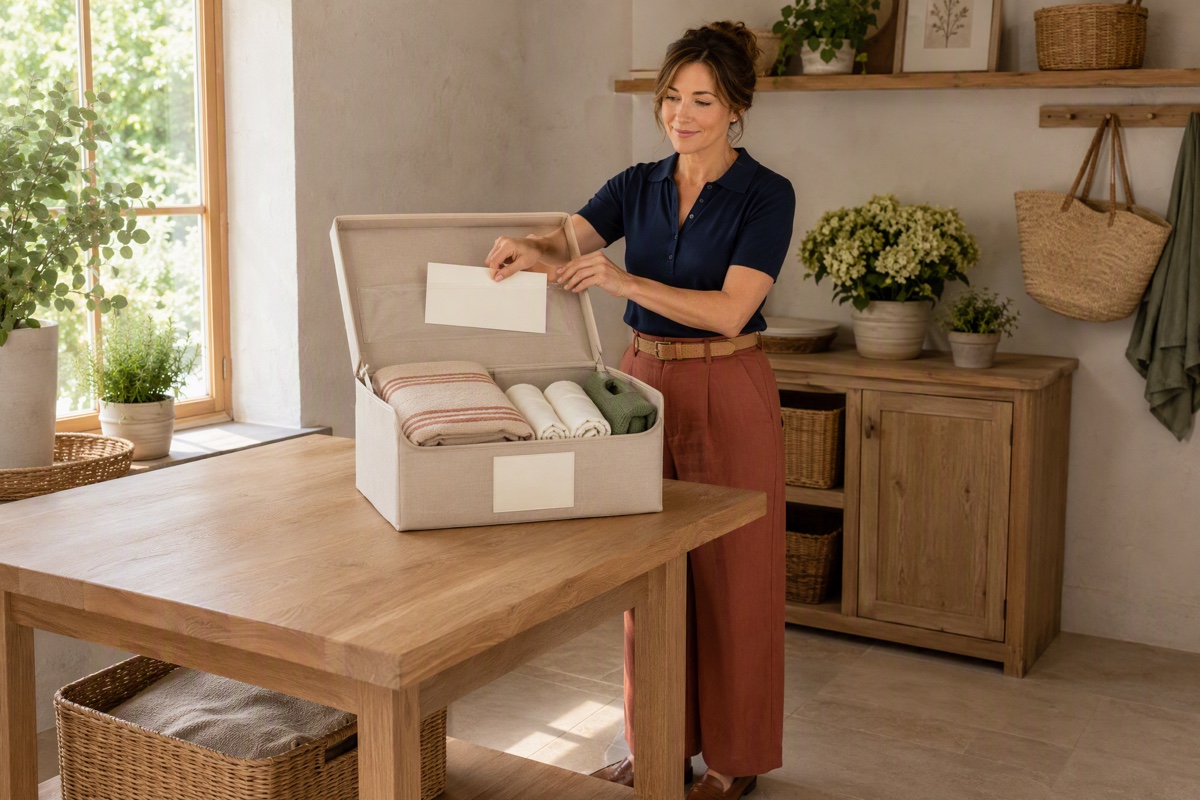
A seasonal handoff box carries more than objects from one season to the next. It also carries the decisions, unfinished work, and small observations that would otherwise have to be rediscovered. The system can be simple: one clearly defined container, one short inventory, and one note for the person who opens it next.
Give the box one clear job
Do not begin by gathering everything associated with summer. Begin with one household zone or activity, such as outdoor dining, porch textiles, picnic supplies, or warm-weather table linens. A narrow purpose makes the box easier to label, fill, lift, store, and reopen.
The container does not need to be new or decorative. It needs to be clean, dry, sound, suitable for the items, and practical for its storage location. Respect the shelf’s load limit, keep the final box light enough for the people who will move it, and avoid blocking an exit, electrical panel, appliance control, ventilation opening, or established walkway.
If one category becomes too heavy or crowded, divide it into two clearly named boxes. A useful boundary matters more than forcing every related object under one lid.
Finish each item before it disappears into storage
Handle each item according to its care label or manufacturer directions. Remove ordinary soil by the directed method, allow the item to dry fully, and inspect seams, fasteners, coatings, cords, closures, and structural parts that matter to its use. Do not seal a damp item inside the box or assume a general cleaning method suits every material.
Then make one decision. An item can be ready for storage, waiting for a specific repair, leaving the household through an appropriate route, or remaining in use. Avoid putting an unexplained problem into storage. If a cushion cover needs a seam repaired, place a clear task note with the box and keep any required action specific. “Mend the six-inch opening on the blue cover before use” is more useful than “fix later.”
Items with damaged safety parts, uncertain electrical condition, fuel, leaking contents, unstable structures, or another concern that could affect safe use need separate evaluation. A storage box should not hide a question that requires the manufacturer, a qualified professional, a recall remedy, or local disposal guidance.
Make three kinds of handoff
The inventory can fit on one card. Divide it into three short sections so next year’s opening does not become another sorting project.
- Inside now: List the useful contents in plain language and include a count when it prevents confusion, such as two outdoor cushion covers or four picnic napkins.
- Needs attention: Record an unfinished repair, a missing part, or a question that must be resolved before use. Keep urgent work out of long-term storage and assign it separately.
- Remember next year: Note what the household actually learned, such as beginning porch setup two weeks later, storing the tablecloth closer to the door, or not replacing an item that went unused.
Keep the card at the top of the box, in a clear exterior sleeve, or in another location that is obvious before the contents are unpacked. Add the season, household zone, and year to the outside label. A dated label prevents an old note from quietly becoming permanent guidance.
Keep unsuitable items out of the general box
A seasonal household box is for ordinary, compatible items that can be stored together as directed. It is not a place for food, medicine, damp textiles, unidentified liquids, fuel, paint, cleaners, oils, batteries, pesticides, pool chemicals, or products that require a controlled temperature or a special storage method.
The U.S. Environmental Protection Agency notes that paints, cleaners, oils, batteries, pesticides, and other products with potentially hazardous ingredients require careful use, storage, and disposal. The agency advises following the original label, keeping hazardous products in their original containers, never removing labels, and never mixing leftovers. Use the product directions and local hazardous-waste guidance rather than a general seasonal system for those items.
Before a stored consumer product returns to use, check its exact model and identifying details against current manufacturer information and the U.S. Consumer Product Safety Commission’s recall records when relevant. Follow the stated remedy for a recalled item. Do not return it to service, donate it, or pass it along simply because it looks unchanged.
Set the reopening cue before you close the lid
Choose when and why the box should return. Add a calendar reminder tied to a real household cue, such as the first planned outdoor meal, the week porch cushions usually return, or a month before the next warm-weather gathering. Record the exact storage location in the reminder if the box is not easy to see.
When the reminder arrives, open the box before buying replacements. Read the card, confirm the contents, complete the flagged work, and inspect each item again before use. The old inventory is a starting point, not proof that condition, directions, household needs, or recall status have stayed the same.
A seven-step seasonal handoff
- Choose one zone. Limit the box to one activity or household area.
- Follow care directions. Clean and dry each item as its label or manufacturer directs.
- Inspect before storage. Separate anything damaged, uncertain, unsuitable, or still in need of action.
- List what is inside. Use plain names and useful counts.
- Record the unfinished work. Name the exact repair, missing part, or question.
- Leave one note for next year. Preserve what the household learned while the season was still fresh.
- Set a reopening cue. Record when, why, and where the box should return.
Close the season without closing the loop
The most useful seasonal storage system is not the one with the prettiest matching containers. It is the one that lets a future version of the household understand what was saved, what still needs care, and what is no longer worth repeating.
Before you close one summer box, leave yourself one honest note. A few clear words written now can turn next year’s opening from a search into a welcome handoff.
With care,
Hazel