
What a Volunteer Library Makes Possible
August 25, 2026
When I was a girl, the best library I knew was not a building at all. It was the wall of bookshelves my mother kept in our living room. She filled them with big collections that arrived by subscription, and one of those sets was all arts and crafts. I would pull down a book, flip through it, and find a project, a puppet or a papier-mâché something, and the supplies were either already there or my mother would get them. I do not remember ever being told no.
That shelf of books made the world feel open. It did not matter that the books were ours. What mattered was the pattern: a book, an idea, permission to try. That is what a library does, whether it lives in a living room or a small community building.
Access Without Requiring Ownership
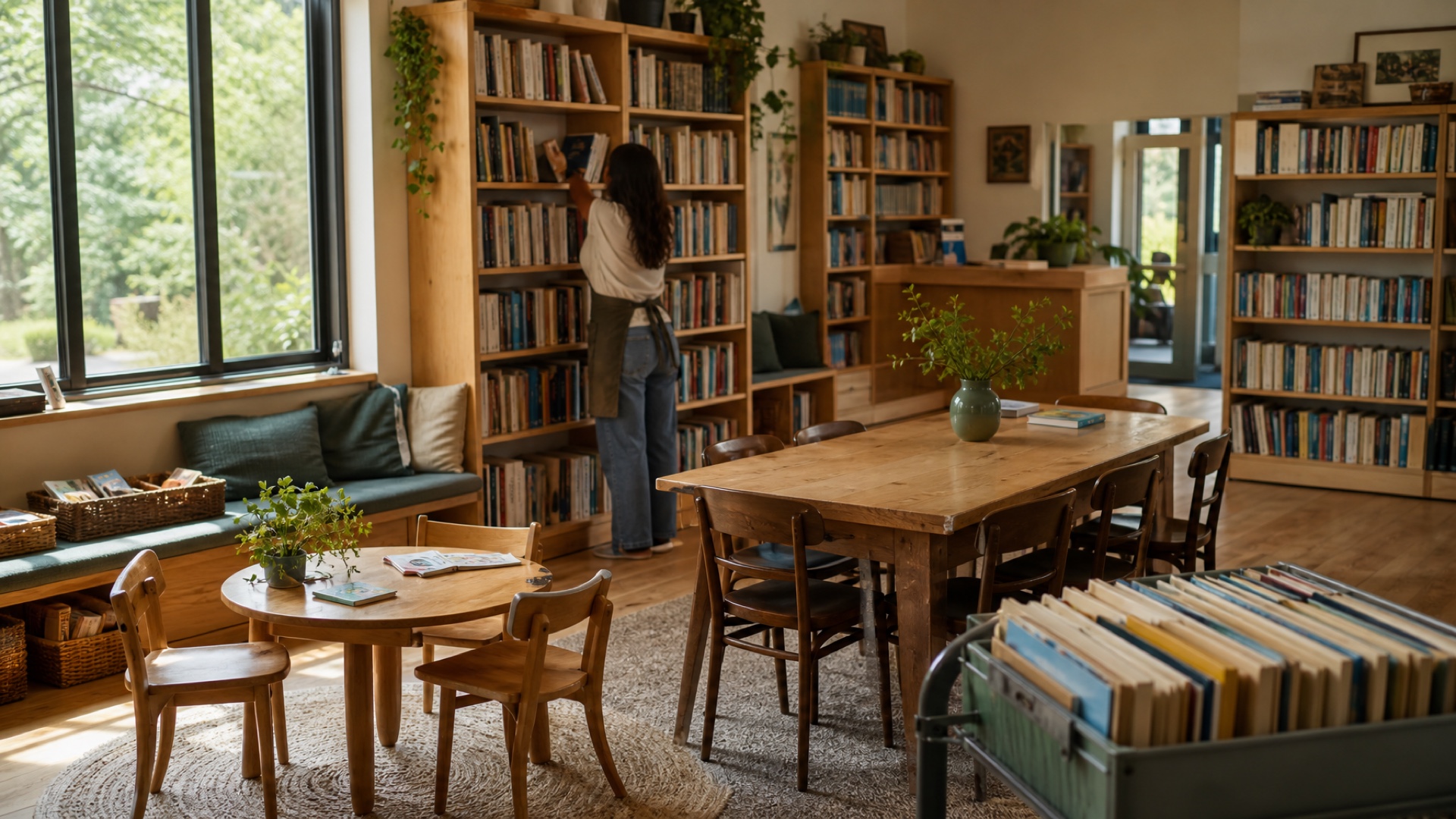
Libraries let people try before they buy and learn without proving they can afford to collect. A reader can explore gardening, local history, birds, cooking, business, music, or a completely new direction without building a personal library first. The shelf does not judge. It just offers.
The Memory of a Place
Community libraries often hold what a place does not want to lose: newspapers, photographs, oral histories, genealogical records, and books that would be easy to lose in a larger system. They help a growing town remember that its story began before the newest road or the newest development. That matters more as places change fast.
A Room for Connection
Programs, book sales, children’s events, study tables, and ordinary conversations make the library a kind of social infrastructure. People arrive for information and leave with neighbors. Volunteers keep that door open, and in doing so they turn private time into public access.
How to Support the Work
Support can be as simple as getting a card, learning the borrowing rules, and attending one program. Ask what the library actually needs before leaving boxes at the door, whether that is volunteer hours, financial gifts, or particular kinds of donated materials. Use the services. Visible participation is how a community shows what it values.
A volunteer library is not small because its building is small. Its reach is measured in every person who finds a book, a connection, a skill, or a quiet place that would not otherwise have been available. Somewhere a child is pulling down a book right now, the way I did in my mother’s living room, and finding that the world has room for what they want to make. That is what a library makes possible.
With love and intention,
Jennifer