
The Hill Country Flood Rule Everyone Should Know
August 26, 2026
I have lived in Spicewood for nineteen years, and the most important thing I have learned about the Hill Country is to respect what water can do. The creeks that run nearly dry in August can become moving rivers after one big rain, and the roads that cross them can disappear under water faster than you expect.
The rule I live by is simple: never drive, walk, or swim into moving floodwater. It is the rule everyone should know, because the water here does not announce itself.
The Water Changes Faster Than Memory
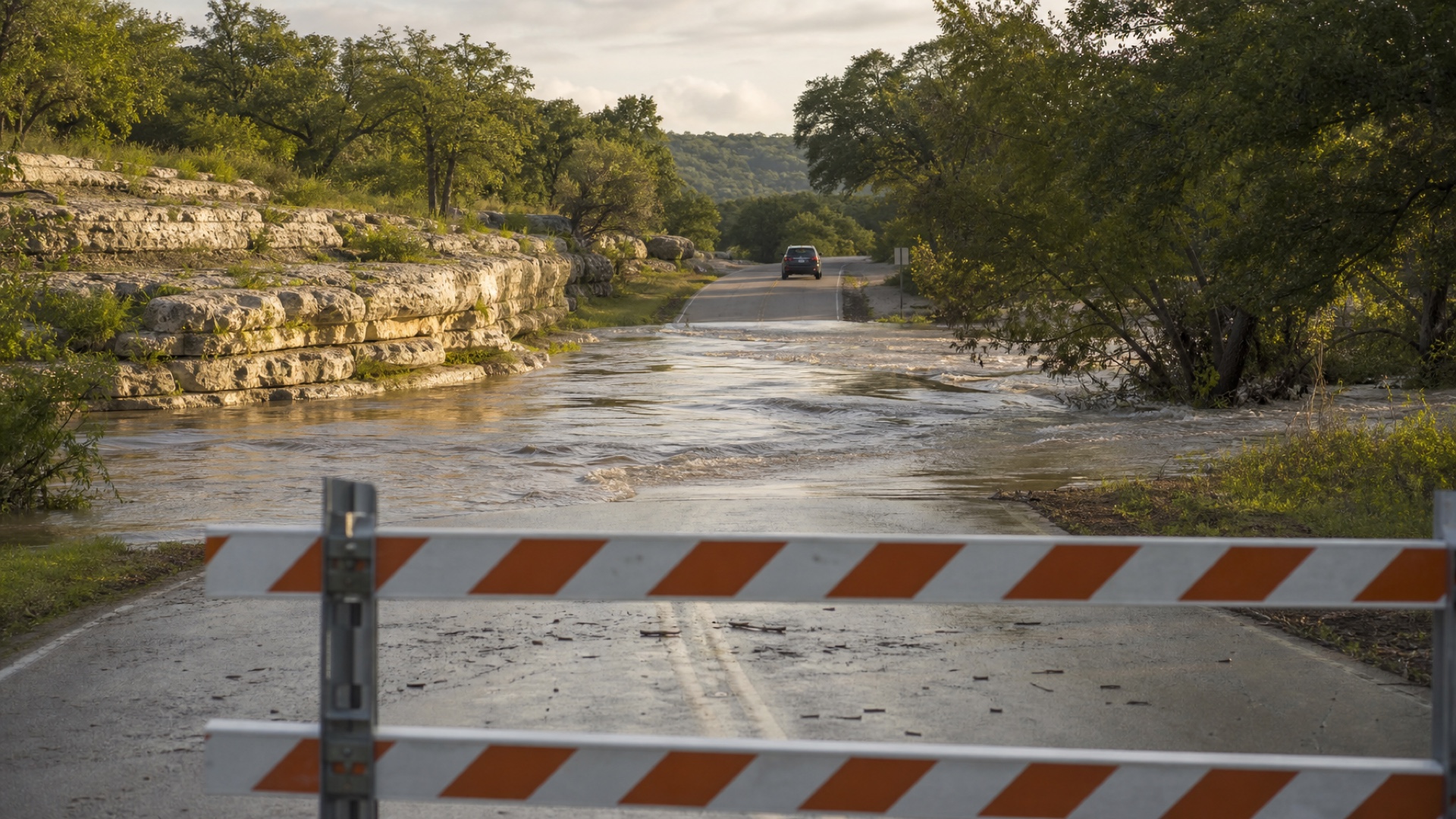
Low-water crossings, dry creek beds, limestone roads, familiar shorelines: they can all change faster than experience can protect us. Rain that falls upstream, out of sight, can turn a crossing you have used a hundred times into something dangerous. The water can be deeper, faster, and more destructive than it looks, especially when the rain has fallen beyond our view.
This summer, the water showed us again what it can do. The lake came up higher than it had been, the creeks ran full, and for weeks the shore stayed marked by what the water had carried. The lesson was not that the lake is dangerous all the time. It was that water here does not stay the way you remember it, and the respectful thing is to give it room.
What the Water Can Do
The numbers are worth knowing, because they are not thresholds to test. Six inches of fast-moving water can knock over an adult. About twelve inches can carry away most cars. Two feet can carry away many SUVs and trucks. The road beneath the water may be damaged or gone entirely, and you cannot see that until it is too late.
If a road is barricaded or water covers the crossing, turn around and choose another route. Do not move a barrier, do not follow another vehicle, and do not assume a familiar crossing is safe because you have used it before.
Watch What the Water Is Telling You
Rapid rise, changing color, new debris, a stronger current, water spreading beyond its usual channel: those are reasons to leave immediately and move to higher ground. Do not wait for certainty. In the Hill Country, the water gives you signs, and the respectful thing is to listen.
The Danger Does Not End When the Rain Stops
Flood danger does not end when the sky clears. Debris stays, banks change, lake access shifts, and crews need room to inspect and reopen places safely. Check National Weather Service alerts and local road closures before you go, and trust them over a photograph from earlier in the day.
This is not a lesson built from fear. It is how we live responsibly in a beautiful place shaped by water. The Hill Country rewards attention, and during floods, attention means choosing distance, higher ground, and official guidance every time.
With love and intention,
Jennifer