Three August Watering Mistakes To Avoid In Texas
August 5, 2026
When temperatures approach 100 degrees, it is easy to assume every tired-looking plant needs water immediately. I learned that reacting to every afternoon droop can create its own problems. A Texas garden needs close attention in August, but it also needs us to read the soil instead of responding to appearances alone.
1. Watering often, but not deeply
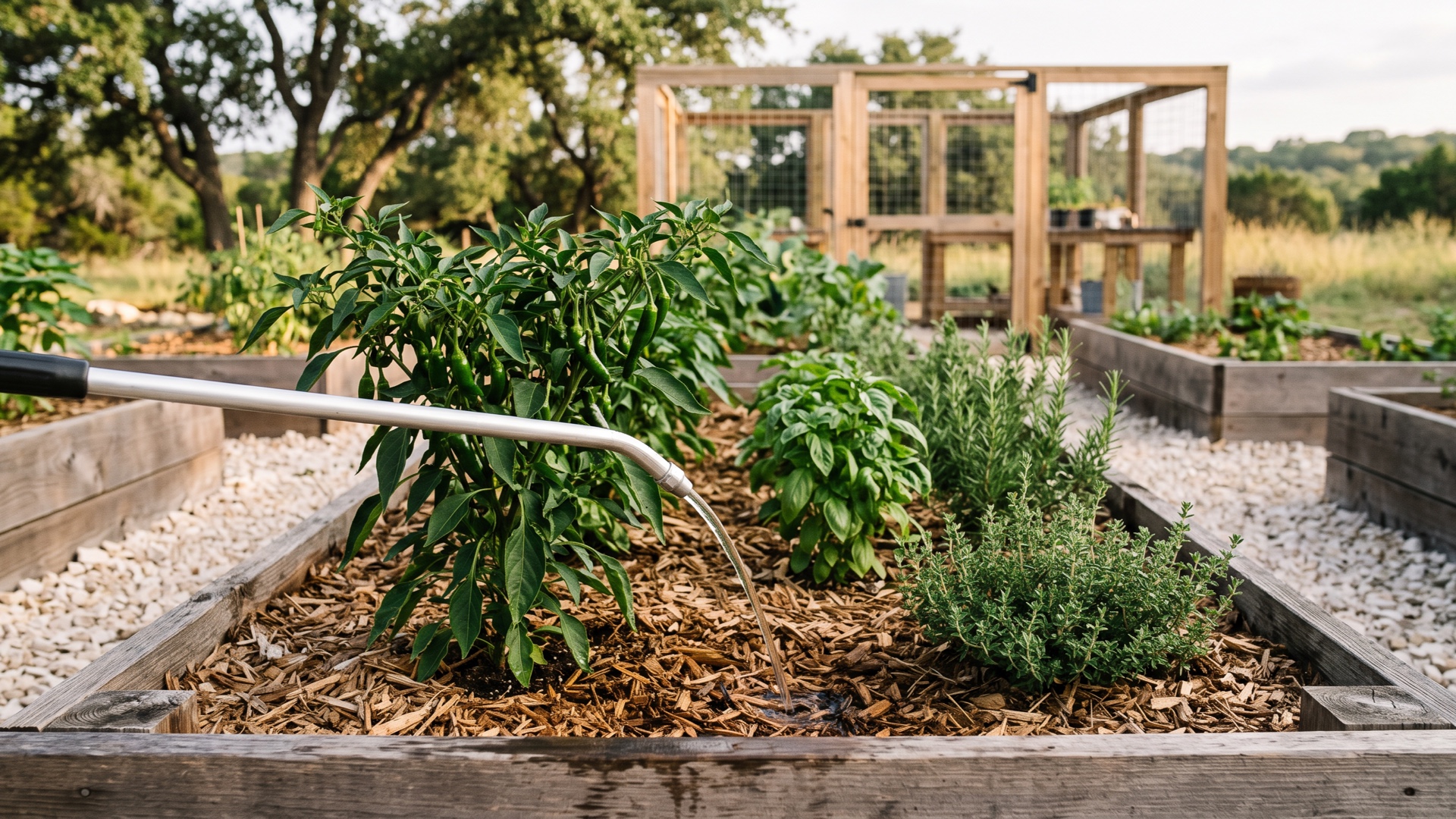
Frequent quick splashes may wet the surface without reaching the deeper root zone. I would rather give a plant one slow, thorough drink than several shallow ones. After watering has had time to soak in, I use my fingers or a small hand trowel to check beneath the surface at a depth appropriate to the plant. The soil should feel cool and evenly moist through the active root area, not muddy or waterlogged.
2. Treating afternoon droop as proof
Some plants wilt temporarily during peak heat even when the soil still holds moisture. Early on, I often reached for the hose in the evening because something looked stressed at three o’clock. Now I watch whether it recovers after the heat eases. A plant that is still wilted early the next morning gives me better information than one reacting to the harshest hour of the day.
3. Letting runoff end the watering
Very dry or compacted soil may shed water before it can absorb it. When I see runoff, I stop, give the soil time, and water again in shorter cycles. The pause matters. It lets moisture move into the ground instead of across it.
Containers, new plantings, established beds, soil types, sun exposure, rainfall, and local restrictions all change how often watering is appropriate. The useful habit is observation: water in the early morning when possible, apply it slowly enough to soak in, check beneath the surface, and let the plant’s next-morning condition help guide the next decision. Always follow the current watering rules for your address.
With love and intention,
Jennifer