
The September Household Calendar I Trust More Than a Perfect Planner
September 1, 2026
September has a way of making a household feel busier before anything dramatic actually happens. The schedules tighten, the errands multiply, the evenings shorten, and suddenly nobody remembers whether the dry-cleaning pickup, the library books, the school forms, or the grocery restock belongs to today, tomorrow, or sometime later.
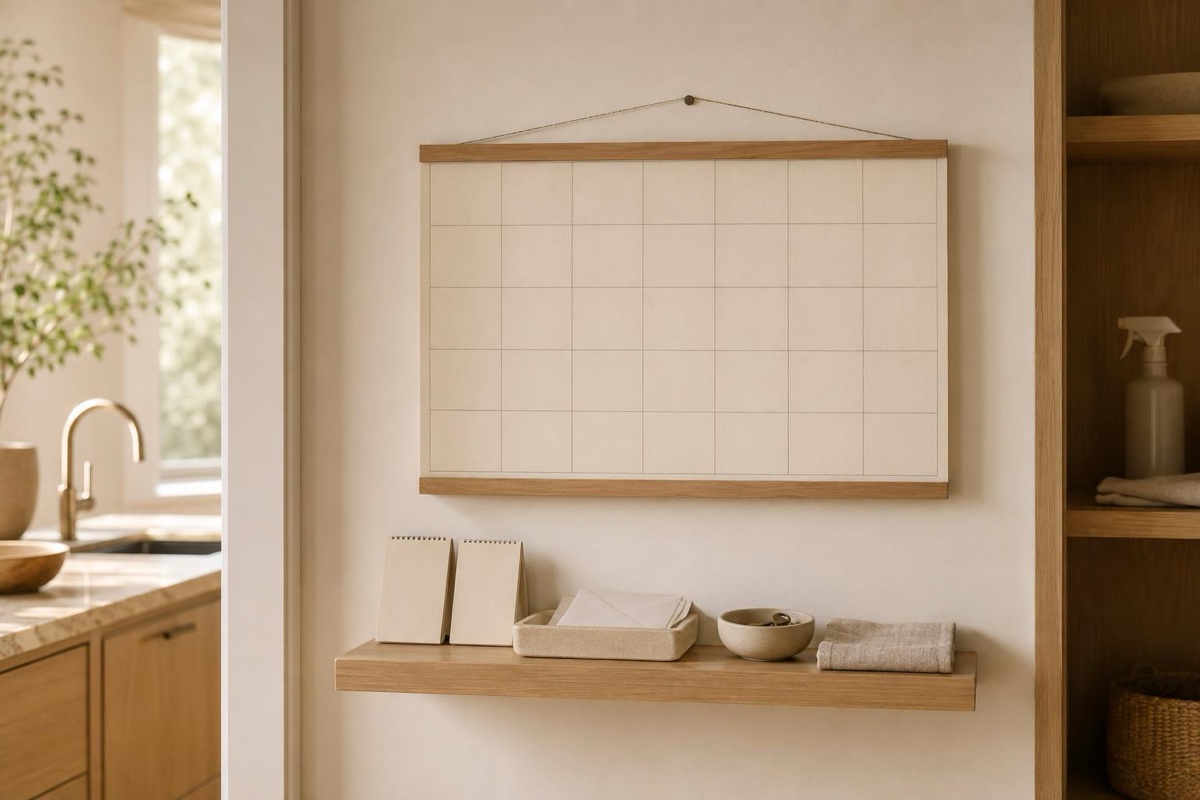
That is why I trust a simple household calendar more than a perfect planner. A good calendar does not try to hold every detail of life in one place. It gives the month a visible shape. You can see what is coming, what repeats, and what needs one deliberate check before the week runs away with itself.
The version I like best is plain. One visible monthly or weekly view. Two short lists. One habit of looking at them at the same time.
Start with one calendar that everyone can see
Use the calendar that lives where the household actually passes by it. That might be a wall calendar in the kitchen, a shared digital calendar on a family device, or a paper planner that gets opened every morning. The important part is not the format. It is visibility.
If the calendar is hidden inside one person’s bag, inbox, or phone screen, it is not a household calendar. It is a private log. There is nothing wrong with that, but it will not help the rest of the house know what is happening this week.
Keep only two recurring lists beside it
The first list is the one that repeats. Mine would include the tasks I never want to remember from scratch: towels, sheets, trash day, grocery restock, and a few cleaning touchpoints that tend to drift when the week gets crowded. The second list is the one that waits. It catches the papers, calls, errands, and refills that should not disappear into the background.
This is where a household can quietly stay ahead of the season. If you keep a cleaning shelf, a laundry shelf, or a utility drawer, you can pair those lists with the things they support. A short refills note beside the cleaning caddy. A laundry reminder beside the hamper. A supply note beside the calendar. None of it needs to be elaborate to be useful.
Give the week one check-in
I prefer one weekly check-in over a dozen tiny updates. Pick a time that already exists in the rhythm of the house. Sunday evening works well for many households. So does Monday morning before everyone scatters. The point is to glance at the coming week, update the two lists, and notice any obvious bottlenecks before they turn into surprises.
That check-in does not have to become a meeting. It can be three minutes with a pencil. If there are school forms, travel plans, laundry pressures, or household supplies that need attention, write them where you can see them. Then leave the planning there and go back to the actual week.
Protect the calendar from becoming decoration
A beautiful planning setup can still fail if nobody uses it. So keep the calendar close to the decisions it supports. If the household calendar helps with dinner, errands, and cleaning, put it near the kitchen. If it helps with the first and last thing people do on the way in and out, put it where shoes, bags, and keys naturally pass.
And if the calendar starts collecting old reminders, duplicate notes, and the emotional weight of perfection, clean it off. A household calendar is most helpful when it stays boring in the best possible way: current, visible, and easy to trust.
The real goal is not planning for its own sake. It is knowing, at a glance, what September is asking of the house. When the month can be seen clearly, it stops feeling like a fog of obligations and starts feeling like a series of ordinary tasks you can actually meet.
With care,
Hazel