
Why Laundry Feels Bigger Once the Weather Cools
September 2, 2026
Cooler weather changes laundry before it changes the calendar. Laundry does not suddenly become more moral, more urgent, or more difficult in any deep sense. It just starts behaving like a bigger job.
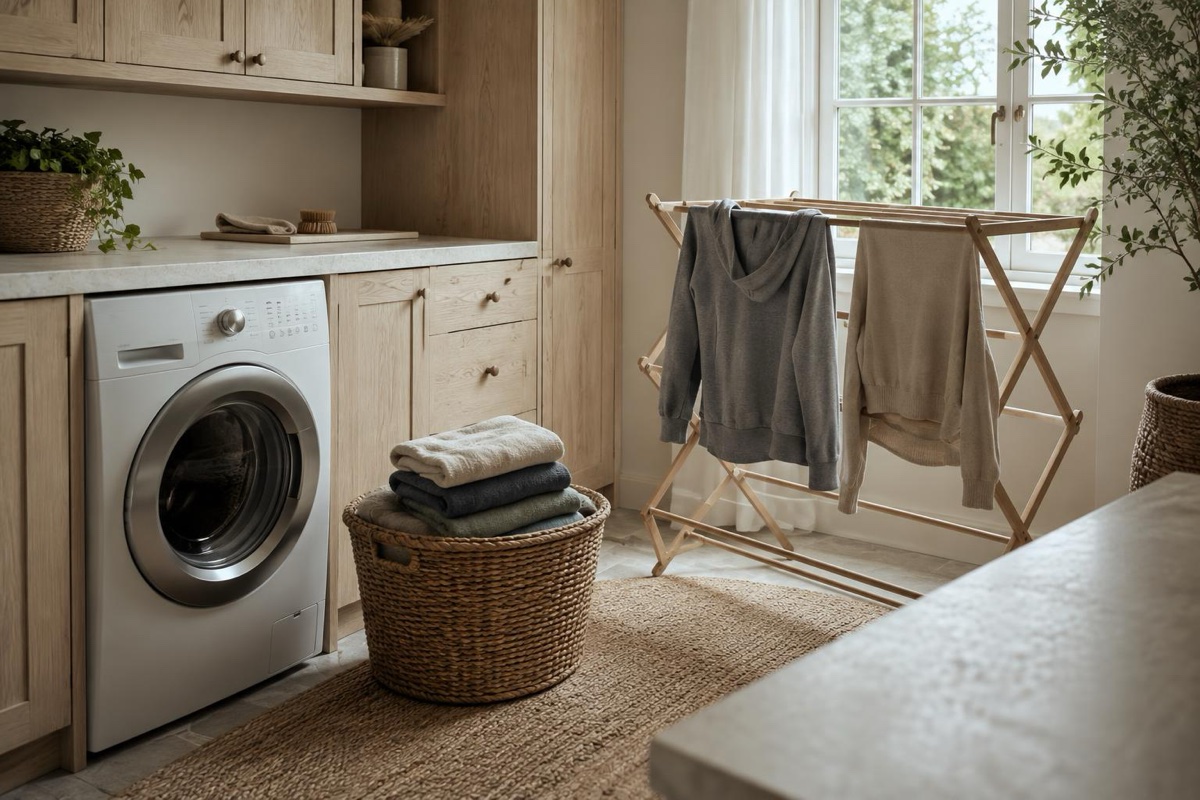
The basket fills faster because the clothes are heavier. Drying takes longer because the air is less forgiving. Sweaters, hoodies, jeans, socks, scarves, and the occasional blanket all begin to compete for the same washing machine, the same drying rack, and the same surface where clean things are supposed to pause before they go back into service. The pile is not imaginary. The season has simply changed the shape of it.
I think that is why fall laundry can feel so disproportionate. Summer laundry is often lighter, faster, and easier to sort into small loads. Fall laundry asks for more time, more space, and a little more planning. If you do not notice the shift, it feels as if the house has become less manageable overnight.
Heavier clothes change the pace
A stack of cotton tees does not behave like a stack of sweatshirts. Neither do a load of shorts, a load of school clothes, and a load of thick layers you actually want to wear outside. Once the weather cools, the household starts moving fabric that holds more weight and more moisture. Even when the number of garments stays the same, the load feels more substantial.
That is one reason I prefer to sort with real use in mind instead of pretending all laundry is interchangeable. A load of towels, a load of knits, and a load of everyday clothes each ask for slightly different handling. The more clearly you know what is in the machine, the less likely the task is to sprawl into guesswork.
Drying slows down whether you notice it or not
Cooler air does not always dry clothes as quickly, and the shift becomes obvious the moment the house stops acting like summer. Even if the machine does its part, the rest of the process can take longer. A garment that dried quickly in July may still be damp when you come back to it in September. A towel that was fine on the rack yesterday may need more time today.
That slower pace changes how the whole room feels. A laundry room with one extra drying rack, one clear counter, and one place to hang the things that should not go straight into the drawer becomes a lot more useful when the season cools. The room does not need to be fancy. It needs to support the delay.
More layering means more small loads
Fall clothing is often less forgiving of being thrown into one enormous wash together. You have more layers, more special handling, and more items people reach for daily. That tends to create smaller loads spread across more days. It is not a failure of organization. It is the natural result of people wearing more things.
What helps most is not a dramatic system but a cleaner one. Keep the laundry basket where people actually drop the clothes. Keep a place for garments that are waiting to dry. Keep a shelf for detergents, stain treatment, and the small room-cleaning supplies that make the space feel ready instead of unfinished. I keep a Botanic All-Purpose Cleaner Tablet bottle on the laundry shelf for the sink, counter, and the little splashes of ordinary dirt that belong to the room itself.
Fall laundry needs one more bit of attention
When the weather cools, laundry becomes less forgiving of delay. Damp things sit longer. Baskets overflow sooner. Clean clothes are more likely to stay folded in the wrong room because the week got busy before anyone put them away. The fix is not to demand perfection from yourself. It is to notice the change early enough to adjust the rhythm.
That might mean starting a load earlier in the day, giving yourself room for longer drying time, or keeping one extra surface clear so freshly washed clothes have somewhere to land. The point is to stop treating fall laundry like a weaker version of summer laundry. It is a different season, and it deserves a different pace.
Once you accept that, the task usually gets easier. Not smaller. Just easier to read.
With care,
Hazel