Let’s Make Home Feel Easier, One Small Rhythm at a Time
July 17, 2026
Before beginning a new homekeeping routine, resist the urge to change everything at once. Begin with one small rhythm that would make the next day easier.
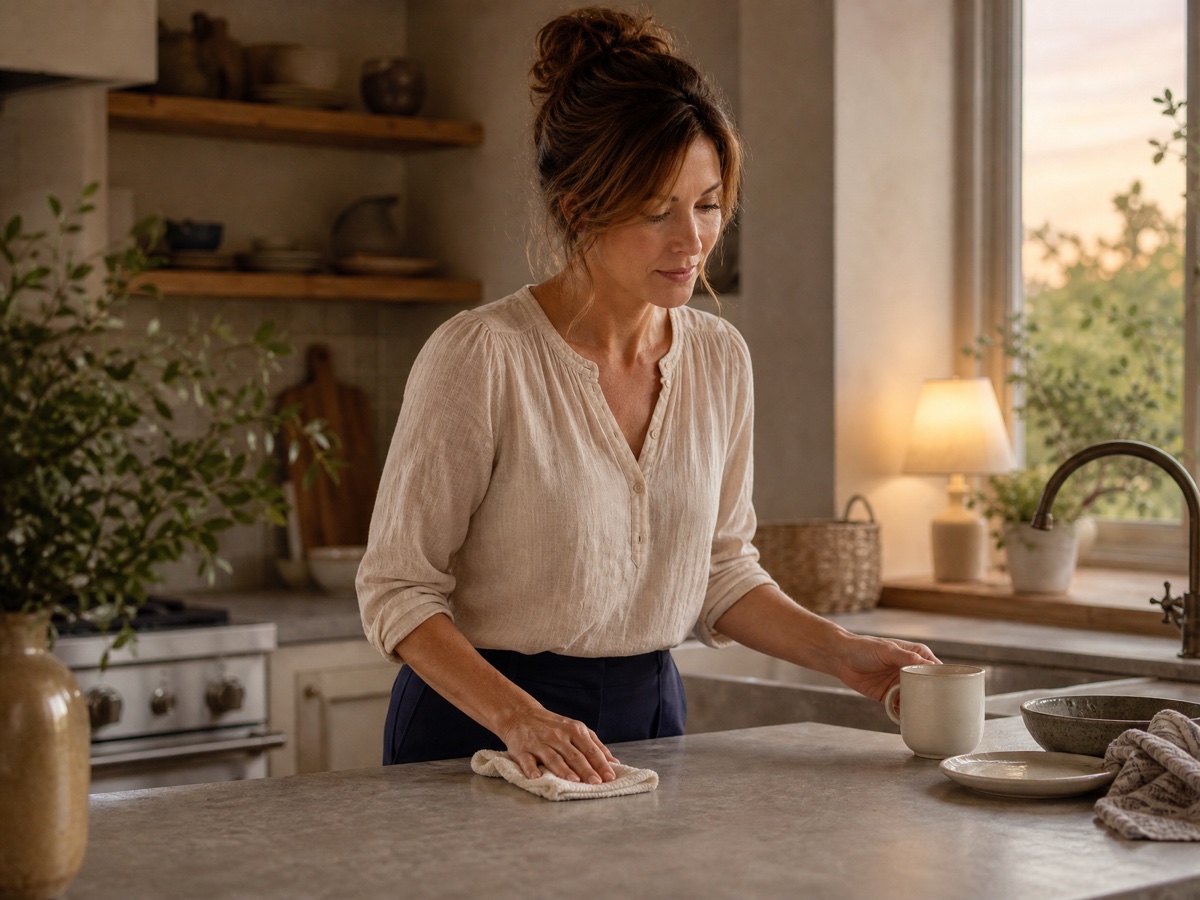
It might be a ten-minute kitchen close after dinner. It might be choosing a regular day for towels, returning stray items to their rooms before bed, or checking bathroom supplies each Sunday. Small actions become meaningful when they remove friction from the life you are already living.
Start with repeated friction
You do not have to start with the messiest room. Start with the space or task that creates the same difficulty again and again. If mornings feel rushed because the kitchen is still carrying last night, begin there. If clean and dirty laundry lose their boundaries, begin there. If entering the house feels chaotic, begin with the landing spot by the door.
The best first rhythm is the one whose benefit you will notice.
Make the rhythm smaller than your ambition
A rhythm earns its place by being repeatable on ordinary days. Use four questions:
- What result do I want to create?
- What is the smallest action that supports it?
- What existing moment can cue the action?
- What does “done enough” look like?
For a calmer kitchen in the morning, the action might be loading the dishes and wiping one preparation space after dinner. The rhythm is complete when that space is ready for breakfast. Anything more is optional.
Give the routine a stopping point
Without a stopping point, a small reset can quietly become another demand. Decide in advance what counts as complete. A clear boundary protects the usefulness of the rhythm and makes it easier to begin again tomorrow.
Let the routine serve you
If a rhythm consistently makes life harder, adjust it. Perhaps the timing is wrong. Perhaps the task is too large. Perhaps it belongs weekly rather than daily. A routine is a tool, not a rulebook.
Over time, you can build rhythms for kitchens, bathrooms, laundry, seasonal changes, and household tasks that are easy to forget. You can also leave a rhythm behind when it no longer serves the home. Good systems are allowed to change.
One useful beginning
Choose one small rhythm this week. Keep it simple enough to repeat, give it a natural cue, and notice what becomes easier. That is enough to begin building a homekeeping system that supports you rather than asking you to perform.
Weekend invitation: Name one repeated household friction and choose the smallest useful response.
With care,
Hazel