Why Hard Water Leaves Spots and Mineral Film
July 30, 2026
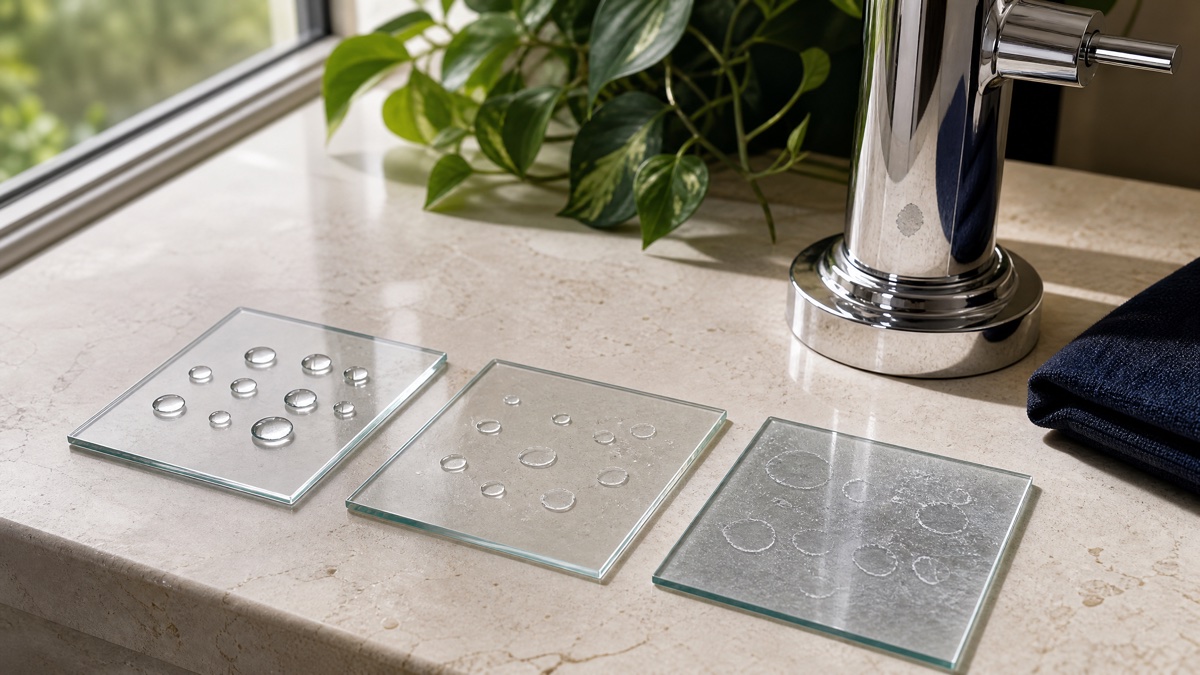
Hard-water spots are not simply dirt. They are often residue left behind when water containing dissolved minerals dries on glass, fixtures, tile, or another surface.
What makes water hard?
The U.S. Geological Survey defines water hardness as the amount of dissolved calcium and magnesium in water. As water moves through rock and soil, it can pick up these naturally occurring minerals. When droplets evaporate, some of that material remains as spots, haze, or scale.
Hard water can also react with soap and contribute to soap residue. That is why a shower door may hold both mineral film and body-care residue at the same time. One quick wipe may not address both types of soil equally.
Prevention is easier than removal
- Use a squeegee on suitable shower glass after use.
- Dry fixtures and counters where water regularly collects.
- Address light film before it becomes a thick deposit.
- Follow the manufacturer instructions for descaling coffee makers and other appliances.
Protect the surface
A method that works on ordinary glass may damage natural stone, specialty metal finishes, grout, or protective coatings. Never assume an acidic product is suitable merely because it can dissolve some mineral deposits. Check the surface manufacturer guidance and the cleaner label first, then patch-test when appropriate.
Your local water utility can provide information about local water hardness. Understanding the water helps explain why the same cleaning routine performs differently from one home to another.
With care,
Hazel