
One Bottle, One Clear Label: Set Up a Ready-to-Use Cleanser Clearly
August 28, 2026
A cleanser refill can feel perfectly clear to the person who prepared it and surprisingly uncertain to the next person who reaches for the bottle. Which formula is this? Where are the directions? Is it meant for routine cleaning, or does it have a sanitizing or disinfecting claim? Where should it go when the task is finished?
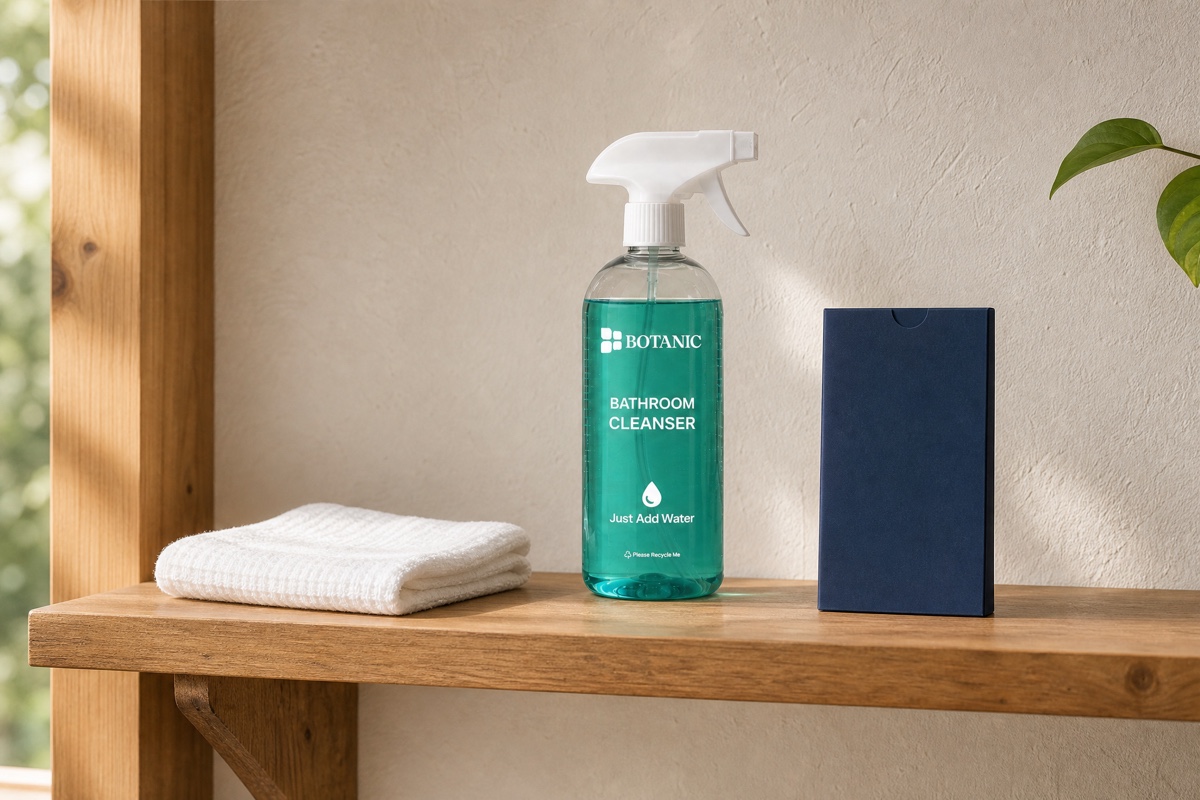
A good bottle setup answers those questions without asking anyone to recognize a liquid by color, remember a past conversation, or guess from the room where the bottle was found. The goal is not decorative organization. It is a reliable household handoff built around the product’s real identity.
Keep the manufacturer’s label as the main identity
The clearest bottle is the correct bottle with its original product label intact, readable, and facing the person who will use it. Do not cover the product name with a decorative sticker, replace the label with a generic word such as “cleaner,” or transfer the prepared cleanser into an unmarked spray bottle for a matching-shelf look.
The American Cleaning Institute identifies directions, caution warnings, ingredients, and storage and disposal instructions as four key parts of a cleaning product label. Some information may also live on a linked online record. A household cue can help someone find that information, but it should not rewrite, shorten, or compete with the manufacturer’s directions.
Color may help you notice a bottle, but color is not a sufficient identity system. Pair any color cue with the exact written product name and keep the bottle label visible. This matters especially when several formulas use similar containers or when more than one person shares the cleaning routine.
Confirm the preparation record before the bottle enters service
Botanic’s current product-information page describes a four-part tablet sequence: fill the reusable Botanic bottle with water, drop in the cleaning tablet, allow the tablet to dissolve fully, and then clean. The current Bathroom Cleaner Tablet listing says to add water and identifies the product’s stated jobs and soils, but it does not publish an exact water quantity, water temperature, dissolving time, closure or agitation direction, or prepared-solution storage life.
Those missing details should not be guessed. Before preparing the bottle, check the current official listing, physical tablet package, bottle, and any official instructions supplied with the order. Follow the most specific current direction for the exact formula. If a required detail is still absent, leave the tablet dry and contact Botanic support before proceeding.
Once the directed preparation is complete, the household system begins. Do not add another tablet, top off the bottle by sight, combine formulas, or pour in a different product. If the bottle was used for something else, its history is uncertain, or the sprayer is damaged, ask for the approved replacement or next step rather than improvising.
Give one bottle one stated cleaning role
The current Bathroom Cleaner Tablet listing names sinks, countertops, tubs, showers, toilets, and bathroom surfaces, and says the formula helps remove soap residue, water spots, grime, and everyday buildup. Those statements describe the listing’s current cleaning role. They do not override a surface manufacturer’s care directions, establish universal material compatibility, or create a sanitizing or disinfecting claim.
The Centers for Disease Control and Prevention distinguishes cleaning from sanitizing and disinfecting. It advises choosing a product suitable for the surface and following the product label. Unless the exact product carries the required sanitizing or disinfecting directions and claims, identify it to the household as a cleaner.
A simple household note may repeat the exact formula name, say “cleaner,” point to the current official directions, and name the bottle’s return place. Keep that note beside the storage location or in a household reference file. Do not tape over the product label, invent directions, copy a claim from another formula, or add a homemade dilution.
Choose a return place that preserves the label
Store and use cleaning chemicals out of reach of children and pets, as the CDC advises, and follow every product-specific storage direction. Choose a stable location where the bottle can remain upright, the trigger is protected from accidental pressure, the label stays dry and readable, and the cleanser is separated from food, medicine, personal-care items, and any product with which it could be confused.
Face the label forward when the bottle is returned. If the storage area is dim, crowded, damp, or so deep that bottles are hidden behind one another, the location is working against the recognition system. Improve the shelf arrangement or lighting rather than adding a second identifying code that only one person understands.
Use a six-part bottle handoff
- Match the formula: Connect the exact tablet to its corresponding labeled bottle before any preparation begins.
- Verify the directions: Read the current listing, package, bottle, and official instructions, and pause when an essential detail is missing.
- Prepare exactly: Complete only the stated sequence for that formula without doubling, splitting, topping off, or combining products.
- Keep the identity visible: Leave the manufacturer’s label intact, readable, and facing forward.
- Name the role and source: If a household cue is useful, repeat the exact formula name, identify it as a cleaner, and point to the official directions without replacing them.
- Return it consistently: Store the upright bottle in its directed household location so the next person finds the same product, label, and directions together.
Stop when the bottle becomes uncertain
Take the bottle out of service if the label is missing or unreadable, the contents are uncertain, another product may have been added, the sprayer or container is damaged, or the official directions can no longer be matched to the formula. Do not identify an unknown cleaner by smell, color, foam, or the cabinet where it was found.
The best setup is wonderfully ordinary: one exact cleanser in its correct bottle, one readable label, one trustworthy directions source, one stated cleaning role, and one consistent return place. If the next person can identify the bottle without guessing, the system is doing its job.
With care,
Hazel