
What Locally Owned Businesses Teach Us About Trust
August 29, 2026
On June 23, 2007, I moved into Spicewood late in the day and needed somewhere to eat. Poodie’s Roadhouse was open. I ordered a cheeseburger with green chiles and sweet potato fries.
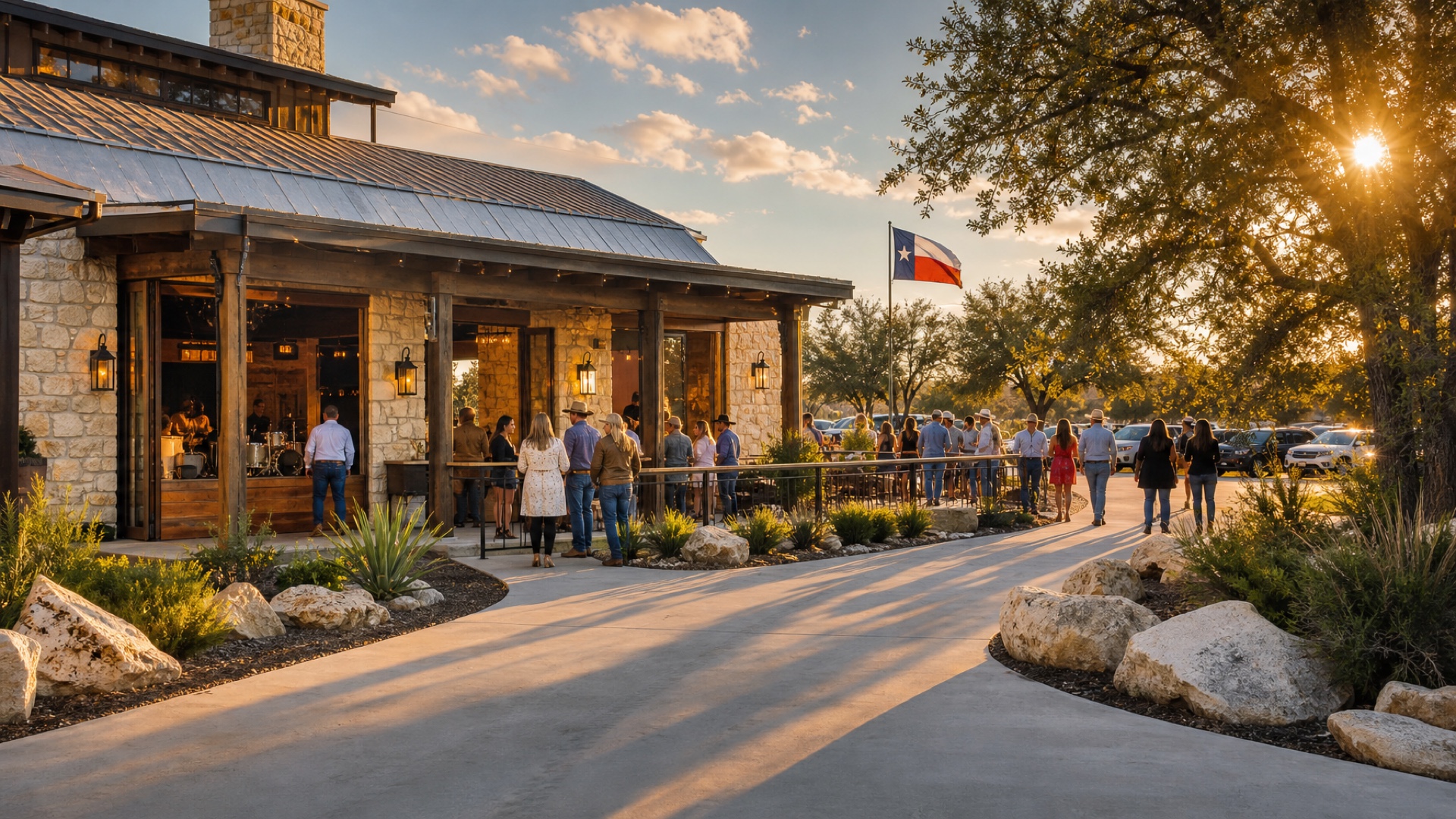
Almost twenty years later, I still order the same meal. Poodie’s has become much more than the place that fed me on my first night in town. It is where John and I hear live music and meet friends. It is welcoming to children, so we take the kids. And it is the first place we choose when friends or visitors come and need to experience the character of Spicewood. I call it the Cheers of Spicewood, because that is what it is: the music is consistently good, the patrons are good people, and the folks who own and work there make it feel familiar every single time.
Trust Is Built in Public
Locally owned businesses live close to the consequences of their decisions. The owners and the people behind the counter encounter you again, next week and the week after. Knowledge, service, and reputation accumulate through repeated contact. A promise is not just a line in an advertisement; it becomes something neighbors can test over time, and they do.
Poodie’s walls carry visible evidence that accomplished musicians have passed through that room, and the atmosphere keeps the memory of every one of them. That is what local places hold: not just transactions, but the layered history of a community that keeps showing up.
A Business Can Become Social Infrastructure
Over the years, places such as Poodie’s, La Cabana, Angel’s Icehouse, J5 Steakhouse, The Lighthouse, and Briarcliff Marina have organized local life in different ways. People eat there, work a first job there, hear music, meet friends, take children, launch boats, and keep running into one another. Our kids worked at The Lighthouse, and I joke that every kid in Spicewood does at some point. It is not a literal statistic. It is the affectionate truth of a place where young people get their first taste of work and belonging.
The transaction matters, but the relationship around it is what turns a business into a community anchor. That is the difference between a place where you spend money and a place that becomes part of who you are.
Scale Does Not Have To Erase Accountability
The lesson applies beyond small towns. Any business can choose clear standards, useful service, honest communication, and long-term relationships. Growth should strengthen those practices rather than making people feel anonymous. I believe that with my whole company behind me: trust is not created by saying a company is trustworthy. It is created when people experience the same care often enough to believe it will still be there next time.
That is what locally owned places teach so well. Reputation is built one kept promise, one familiar face, and one return visit at a time.
With love and intention,
Jennifer