The Weekly Pizza Jobs We Each Know by Heart
October 22, 2026
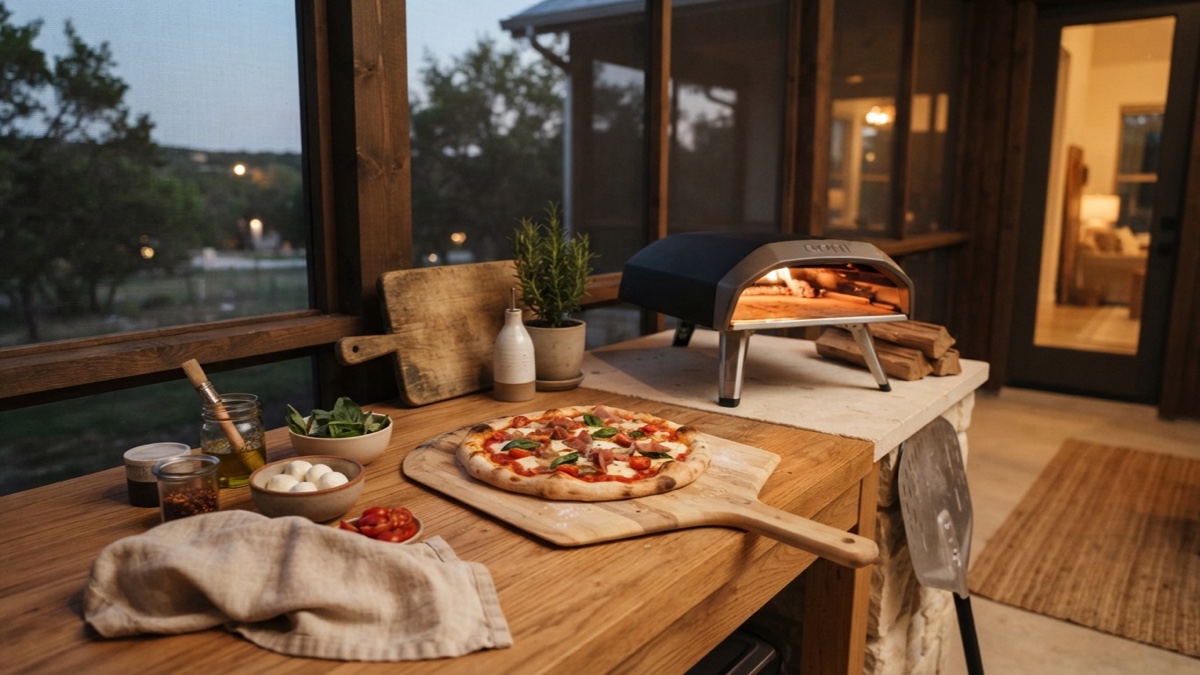
On pizza days, John makes the dough in the morning. I handle the sauce and toppings. When it is time to cook, he takes over the pizza oven on the screened porch.
We have repeated these jobs often enough that no one needs a meeting to explain the plan. The rhythm lives in our hands.
A tradition built from separate parts
Pizza is a useful example of why shared meals do not require one person to carry the entire experience. Dough takes time and benefits from an early start. Sauce and toppings require another kind of preparation. The oven asks for attention and timing once everyone is ready to eat.
Dividing the work allows each person to bring what they know. It also turns dinner into something the household makes together rather than something that simply appears.
We once made fresh mozzarella as part of the project. Most of the time we use store-bought cheese because a tradition does not need to become maximally difficult to remain meaningful. The point is not to prove we can make every component from scratch. The point is that we return to the meal.
Repetition creates memory
A tradition does not need a holiday or an elaborate story to begin. It can be a meal repeated often enough that people remember who does what, how the kitchen smells, and where they tend to stand while the work is happening.
Over time, small variations become part of the pleasure. The toppings change. The weather on the porch changes. One crust may be better than the last. Someone may try a combination the rest of us would not have chosen.
The structure remains recognizable while the details stay alive.
Useful food can still feel special
I like meals that solve a practical need and also create a reason to gather. Pizza does both. It can accommodate different preferences without turning dinner into several unrelated meals. It invites people to participate. It makes waiting near the oven part of the evening rather than an inconvenience to eliminate.
The meal feels special because it is ours, not because it is complicated.
Choose a rhythm your household can keep
If you want to create a food tradition, begin with something realistic enough to repeat. Consider the time, tools, budget, dietary needs, and energy available in your household. A meaningful weekly meal can be homemade pizza, soup, breakfast for dinner, rice and beans, takeout on real plates, or something rooted in your own culture and history.
Then let people participate in ways that fit their ability. One person can plan. Another can prepare. Someone can set the table, choose the music, or handle the cleanup.
The meal becomes part of a household when the work and pleasure can both be shared.
With love and intention,
Jennifer