
One Room, Less Noise: A Fall Quieting Exercise
September 16, 2026
Some rooms become noisy without actually getting louder. They collect too many objects, too many visual interruptions, and too many tasks that are trying to live in the same place. Fall is a good time to notice that kind of noise because the season itself is already asking the house to become a little more settled.
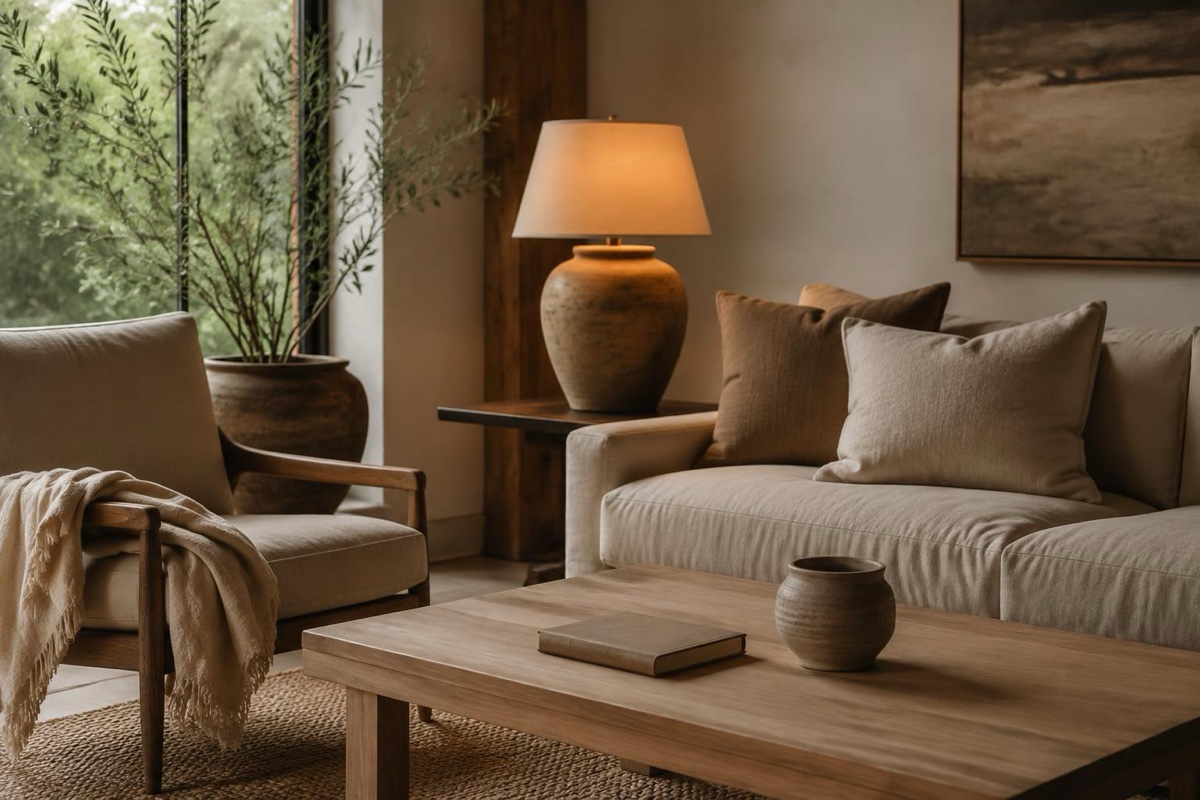
The goal of a quieting exercise is not to empty the room. It is to reduce the things that keep the space from feeling restful, usable, or clear. One room is enough. Pick the room you want to feel better this week and make it less demanding on the eye and the body.
Start with what interrupts the room
Look for the objects that create decision-making noise. A stack of papers that belongs somewhere else. A charger that is always in the way. A basket that has become storage for unrelated things. A surface that no longer has any breathing room. Remove or relocate the obvious interruptions first.
Keep the useful things, but simplify their placement
A quiet room is not a bare room. It still needs books, lamps, throws, baskets, or the few items that genuinely belong there. The difference is that each useful object should have a more obvious place and a little more space around it. A room can feel calmer when its best things are easier to notice.
Use light and texture on purpose
In fall, the room often benefits from a lamp instead of a harsh overhead light, a folded throw instead of extra visual clutter, or one grounded textile that softens the hard edges. Those are not decorative tricks. They are ways of helping the room feel more settled without adding more things.
Stop before the room becomes a project
A quieting exercise should leave the room easier to inhabit, not exhausted from being edited. If the changes start to feel like a renovation, stop. The point is less noise, not total transformation.
One room can carry a season differently when it is allowed to breathe a little.
With care,
Hazel