Garden Walk: What I Am Still Watering in September
September 2, 2026
By early September, the light reaches the garden a little differently, but the afternoon heat still settles over the porch, the beds, and every container. Here in Texas, the plants tell the season more honestly than the calendar does.
My garden walk is not a farewell to summer. It is a closer look at what is still producing, what is confined to a pot, and what the soil is asking for after another hot day.
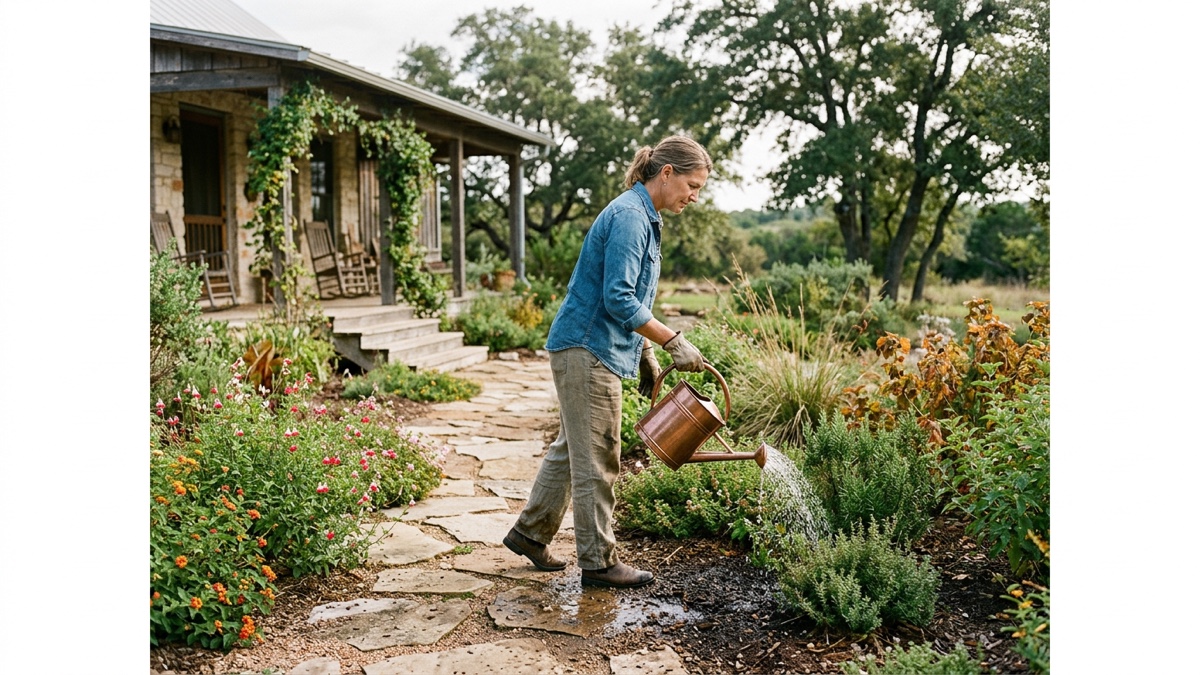
The porch containers get my attention first
Plants in containers cannot reach beyond the soil they have. A full porch of flowers and greenery can need more attention than an established bed in the ground, especially when warm air, reflected heat, and limited soil dry a pot from several directions.
I check each container instead of assuming the whole porch needs the same thing. A smaller pot in brighter light may be ready for water while a larger pot in deeper shade is still comfortably moist. I lift a pot when I can, feel the soil, notice the leaves, and let those clues make the decision.
The productive plants are still working
Basil, peppers, herbs, and other warm-season plants do not stop needing care because September has arrived. If a plant is still flowering or producing, I keep watching it. Heat, fruiting, wind, soil, and the size of its root zone all affect how quickly it uses water.
This is also where mulch earns its place. A useful layer helps shade the soil and slow moisture loss, but it does not replace checking underneath. I move the mulch aside, feel below the surface, and water only when the root area shows that it is time.
I do not water every tired-looking leaf
By late afternoon, even a plant with adequate moisture may look discouraged by the heat. I used to respond to that moment too quickly. Now I look at the soil and watch whether the plant recovers as the day cools. Its condition early the next morning often tells me more than its appearance during the harshest part of the afternoon.
When water is needed, I apply it slowly enough to soak in near the roots. If it begins to run across the surface, I pause and return after the soil has had time to absorb the first pass. The goal is not to make the top look wet. It is to help moisture reach the part of the soil the plant is actually using.
The September walk is a plant-by-plant decision
There is no single schedule that fits a porch pot, a productive vegetable, a newly planted flower, an established bed, and a native plant at the edge of the property. Rainfall, soil, exposure, container size, root depth, and local watering rules all matter. What works in one yard may be wrong in the next.
On your own walk, begin with the plants that have the least room for error: containers, anything recently planted, and anything still flowering or producing. Check below the surface before watering. Notice which areas hold moisture and which lose it quickly. Follow the current restrictions for your address, and let the garden in front of you be more persuasive than the month printed on the calendar.
With love and intention,
Jennifer