Which Botanic Cleanser Fits This Job?
July 24, 2026
The easiest way to choose a cleaner is to begin with two questions: what kind of soil are you removing, and what material are you cleaning? Botanic’s household line includes eight cleanser systems designed for different routines.
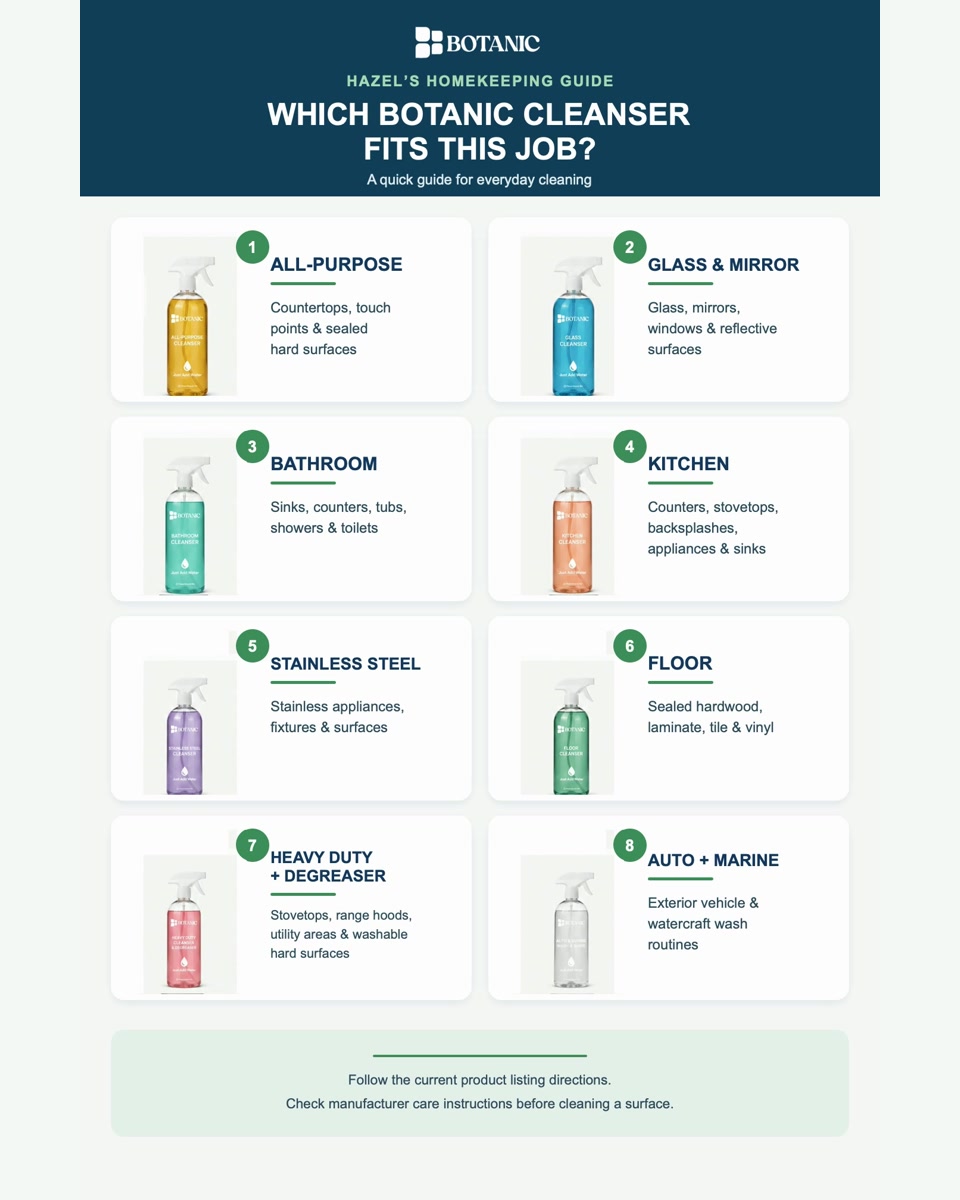
- All-Purpose Cleanser: countertops, touch points, and sealed hard surfaces.
- Glass & Mirror Cleanser: glass, mirrors, windows, and reflective surfaces.
- Bathroom Cleanser: sinks, counters, tubs, showers, and toilets.
- Kitchen Cleanser: counters, stovetops, backsplashes, appliances, and sinks.
- Stainless Steel Cleanser: stainless appliances, fixtures, and surfaces.
- Floor Cleanser: sealed hardwood, laminate, tile, and vinyl.
- Heavy Duty Cleanser and Degreaser: stovetops, range hoods, utility areas, and washable hard surfaces.
- Auto and Marine Wash and Shine: exterior vehicle and watercraft wash routines.
Use the list as a starting point, not a shortcut
Room names are helpful, but they do not tell the whole story. A kitchen may contain sealed stone, stainless steel, glass, painted cabinetry, and a floor with its own care requirements. The same room can therefore call for more than one product, or for plain water and a clean cloth for a minor mark.
Choose the narrowest product fit that the current listing and surface guidance support. If the job is germ control rather than ordinary soil removal, read the distinction between cleaning, sanitizing, and disinfecting before choosing a product.
Check the surface before you begin
A product category does not override the care instructions for a particular finish. Confirm that the material is sealed when required, patch-test when appropriate, and check the manufacturer guidance for stone, wood finishes, specialty coatings, screens, electronics, and other sensitive surfaces.
Follow the current Botanic product-listing directions for preparing and using each cleanser. If a use, dilution, dwell time, rinsing step, or surface is not stated on the current listing, do not assume it.
Begin with the surface, the kind of soil, and the finish. A routine cleaner may be right for a sealed counter or painted surface, while stone, unsealed wood, delicate metal, or a manufacturer-coated material may need a different instruction. Read the product directions and the surface-care guidance together. More product is not a substitute for compatibility, dwell time, or a clean cloth.
When the label leaves a question unanswered, pause rather than improvise. Test a small hidden area when the material allows it, use the least aggressive effective method, and keep the surface wet only as long as the directions require. Never combine cleaners just because both seem mild. A good product decision protects the finish as well as removing the soil.
With care,
Hazel