Before the Porch Plants Come Inside
October 15, 2026
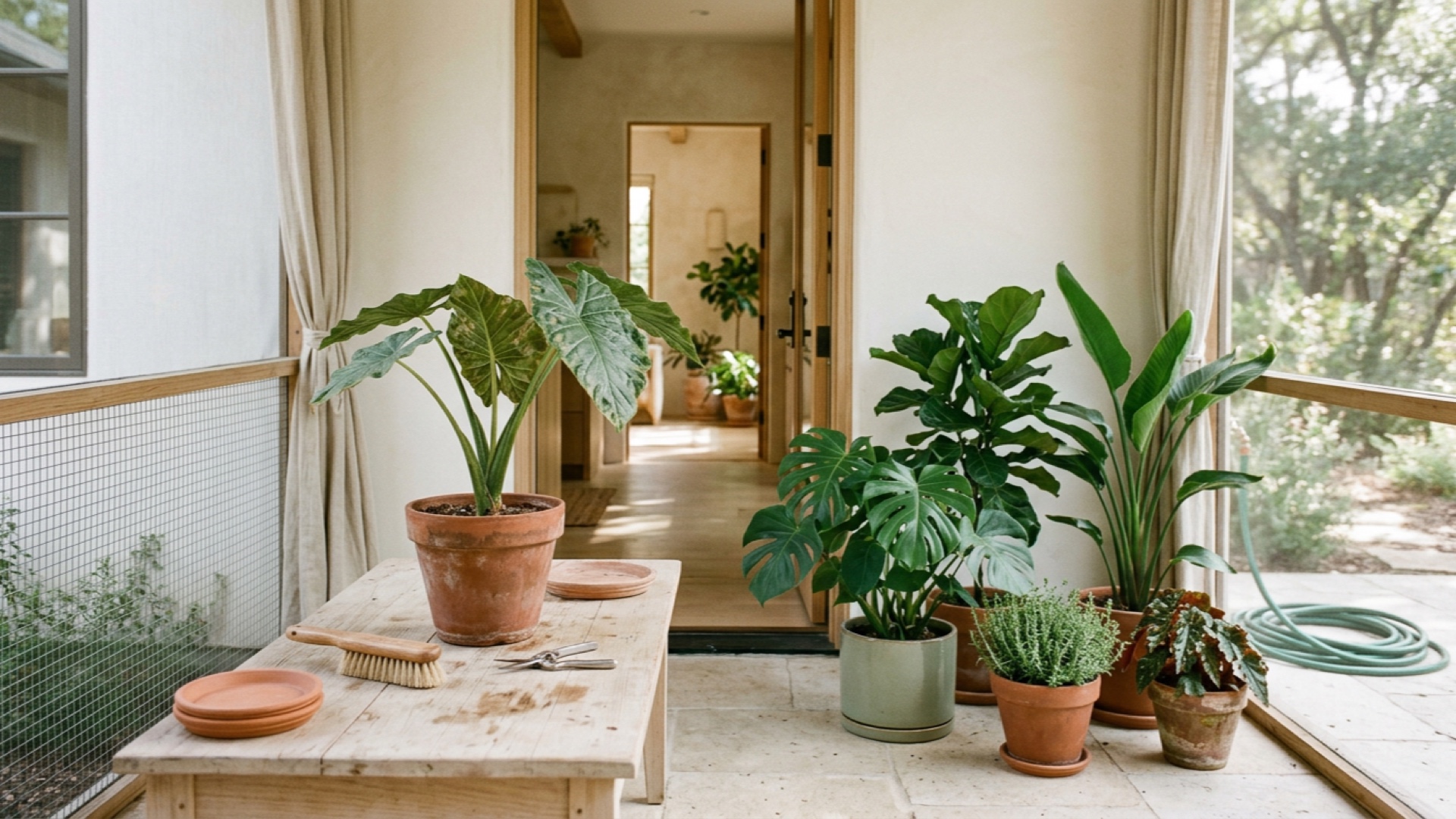
My screen porch holds a lot of plants. In high summer, watering the flowers can take about six trips with a two-gallon can. By October, each container carries a full season of growth, spent stems, soil, and whatever insects found shelter there.
Moving those plants inside is not simply a matter of picking up every pot and finding floor space. It is a plant-by-plant decision about what needs protection, what can remain outdoors, what is healthy enough to bring into the house, and what might be better saved as a cutting.
Let the plant and the forecast decide
The calendar is only a prompt to begin looking. Nighttime temperatures matter more, and different plants tolerate cold differently. Many tropical houseplants need attention before nights settle near 50 degrees, while other container plants can remain outside much longer.
Identify the plant before making the decision. Then check its cold tolerance and the coming nighttime lows. In Central Texas, a warm afternoon can be followed by a much cooler night, so waiting for the first frost can turn a calm project into a hurried rescue.
Inspect outdoors, not in the living room
Look at the tops and undersides of leaves, along stems, across the soil surface, and around the drainage holes. Remove dead or badly damaged material. If the plant is carrying a serious pest or disease problem, bringing it indoors can spread that problem to every healthy plant nearby.
Rinse the foliage outdoors when the plant can tolerate it, then let the pot drain and the leaves dry. Once inside, keep returning plants apart from the established collection for three to four weeks and continue checking them. A little distance at the beginning is easier than treating an entire room later.
Plan the landing place before moving the pot
Indoor light is weaker than outdoor shade, so the place that looks bright to us may still be a significant change for the plant. When possible, ease plants toward lower light before the move. Indoors, match each plant to the light it needs and keep it away from heating vents and cold drafts.
For homes with pets, verify the plant by its exact name before choosing a location. A plant that was safely out of reach on a porch may become accessible after it comes inside. If its identity or safety is uncertain, it does not belong in a shared pet area.
Leave the porch watering schedule outdoors
A container that needed frequent water in summer heat may use much less indoors. Lower light and slower growth change the rhythm. Check the soil and the plant rather than continuing the outdoor schedule by habit, and make sure every pot can drain without damaging the surface beneath it.
Some yellowing or leaf drop can happen while a plant adjusts to the change in light and humidity. That does not automatically mean it needs more water. Give it time, watch the soil, and wait to fertilize until the plant is actively growing again.
Sometimes a cutting is the better choice
In a college propagation lab, I learned to grow new plants from pieces of an established one. That lesson is useful here. Saving a plant does not always require moving the entire mature pot indoors.
If a plant has become too large for the available light and space, or only part of it is healthy, taking cuttings may be the more practical decision. Use the propagation method that fits the plant, choose clean healthy growth, and let the tired container finish its season without turning it into an indoor burden.
The work is finished when every plant has a sound decision, not when every pot has crossed the doorway. Bring in what the house can genuinely support. Leave outside what belongs there. Start smaller when a cutting is enough.
With love and intention,
Jennifer