
A Freezer Inventory That Works Without Perfect Organization
August 3, 2026
A freezer can hold a surprising amount of possibility: ingredients for an easy dinner, leftovers saved for a busy day, fruit at its best, or bread tucked away before it went stale. The trouble begins when that useful food becomes difficult to see. Packages shift, small items slide behind larger ones, and an inventory that once looked beautifully complete stops matching what is actually inside.
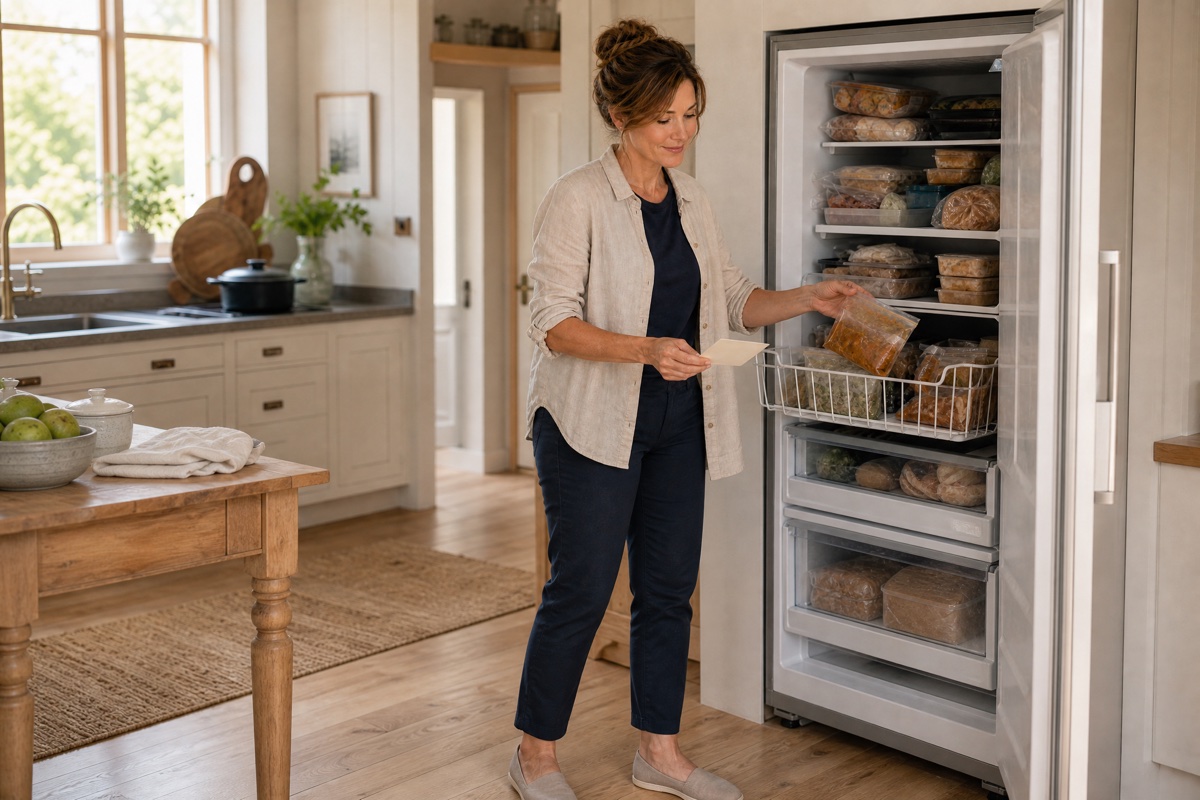
You do not need a perfectly arranged freezer or a line-by-line catalog to solve this. You need a system that answers three practical questions: What do we have? What should we use first? Where should a new item go?
Start with safety, not sorting
Keep the freezer at 0°F (-18°C), and use an appliance thermometer so you can verify the temperature. Do not leave frozen food sitting out while you design the system. Work in one small section at a time, close the door between sections, and return items promptly.
If you discover food that has thawed, leaked, or lost power, do not decide whether to keep it by appearance or smell alone. Follow current USDA or FDA guidance for the specific situation. When food has remained continuously frozen at 0°F, federal guidance explains that recommended freezer times concern quality rather than an automatic safety deadline.
Choose broad zones that match the food you actually keep
Freezer categories should be easy to recognize with cold hands and an open door. Five broad zones are usually more useful than fifteen precise ones. Your household might use:
- Meals and leftovers: soups, casseroles, cooked grains, and individual portions.
- Proteins: meat, poultry, seafood, beans, or meatless alternatives.
- Produce: vegetables, fruit, herbs, and prepared smoothie ingredients.
- Bread and breakfast: loaves, tortillas, waffles, muffins, and similar staples.
- Small extras: stock, sauces, tomato paste, nuts, baking ingredients, and other easy-to-lose items.
Use the shelves, drawers, door compartments, or a few freezer-safe bins you already own to give each zone a home. The container is not the system. The consistent location is the system. Leave enough room for cold air to circulate, and follow the freezer manufacturer’s loading guidance.
Create one eat-first area
The most useful freezer zone is often the smallest. Reserve one visible basket, shelf section, or front corner for food you want to use soon. This might include an older package, a partial bag, leftovers that would make an easy lunch, or an item approaching the end of its best-quality window.
An eat-first area separates urgency from the rest of the inventory. Instead of scanning the entire freezer before dinner, you can begin with one place. Check it when planning meals, and move suitable items forward during your regular grocery put-away.
Label for the decision you will make later
A useful label does not need decorative lettering. Write the food name, the date frozen, and any instruction your future self will genuinely need. For example: “vegetable soup, Aug. 3, thaw overnight” is more helpful than a date by itself.
Follow the package directions for commercially frozen foods. For homemade food, use freezer-appropriate containers or wrapping, remove excess air when the method allows, and label the container before the surface becomes cold or damp. If several portions are frozen together, include the quantity.
Keep a short inventory, not a frozen-food census
A detailed list of every ice cube and half cup of peas is difficult to maintain. Record the foods that are expensive, easy to forget, frequently needed for meal planning, or stored in multiples. A simple inventory might include:
- Three main meal options.
- Proteins and their approximate quantities.
- Homemade stocks, sauces, and prepared ingredients.
- Foods in the eat-first area.
- Anything you are likely to buy again because you cannot see it.
Keep the list where updates naturally happen, such as on the freezer door, inside a nearby cabinet, or in a shared phone note. Use broad quantities like “2 containers” or “about half a bag” when exact counts would make the system harder to maintain.
Update at the two moments that matter
Most inventory systems fail because they depend on a separate weekly audit. Attach the update to actions that already happen:
- When food goes in: label it, place it in its zone, and add it to the short list if it belongs there.
- When food comes out: cross it off or adjust the quantity before you begin cooking.
If the list becomes inaccurate, do not abandon it. Open one zone, correct only that part, and continue. A useful inventory is allowed to be approximate.
Use a five-minute freezer check
Before meal planning or grocery shopping, take five minutes to check the eat-first area, notice any open packages, and confirm the few foods on your short inventory. Wipe a small spill promptly if the freezer instructions allow, but save a full cleaning or defrosting project for a separate time and follow the appliance manual.
The goal is not a freezer that looks untouched. It is a freezer that helps you use what you chose to save. Start with broad zones, one eat-first area, and a list short enough to update while the door is still closed. If the system helps you find tonight’s dinner and prevents one unnecessary duplicate purchase, it is doing its job.
With care,
Hazel