Hazel’s Homekeeping Guide
August 8, 2026
A room can feel crowded long before it is dirty. The coffee table may be usable, the shelves may be dusted, and every object may technically have a place. Still, the room can ask your eyes to take in too many things at once. House hushing offers a way to notice that without turning the afternoon into a donation project.
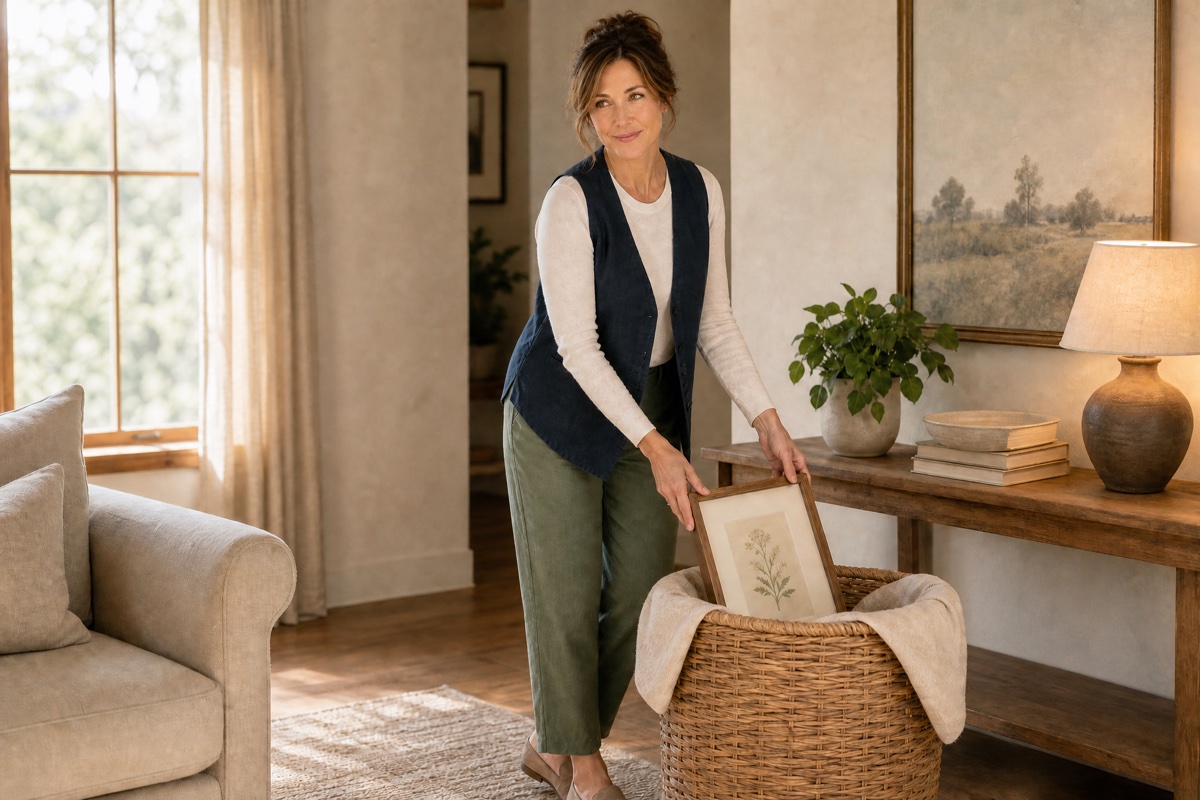
The basic idea is temporary subtraction. You remove some of the visible extras from one room or one clearly defined zone, let the quieter version sit for a little while, and then decide what deserves to return. Nothing has to leave the house today. You are creating enough space to see the room’s function and your belongings more clearly.
House hushing is not the same as decluttering
A decluttering session usually asks permanent questions: Do I keep this? Do I donate it? Where should it live? Those are useful questions, but they can slow the work when you are not ready to make many decisions.
House hushing changes the first question. Instead of deciding whether an object stays in your life, you decide whether it needs to stay in view during this short experiment. The answer can be no for now without becoming no forever.
This distinction also separates house hushing from ordinary surface clearing. Clearing a counter restores one working area and often includes putting each stray item away immediately. Hushing a room creates a deliberate pause. You temporarily reduce the visual layers, live with the result long enough to notice it, and make the return pass as thoughtfully as the removal pass.
Choose a boundary small enough to finish
Begin with one room, one set of open shelves, or one seating area. Do not empty the whole house into a spare bedroom. A useful boundary is large enough to reveal a difference and small enough that you can complete the removal, pause, and return stages without creating a new mess somewhere else.
Set out one clean basket, bin, or cleared table as a temporary holding zone. Choose a place where the contents will remain dry, protected, and out of a walkway. If you are handling fragile, valuable, antique, specialty-finished, or sentimental objects, use appropriate padding and care guidance. Do not stack delicate finishes against one another or place heavy items on top of vulnerable pieces.
Leave essential and safety-related items in service. Smoke and carbon monoxide alarms, medications, medical equipment, mobility or accessibility aids, necessary lighting, pet-care supplies, and anything required for the room to function safely are not decorative extras. In a shared room, ask before moving another person’s belongings, work materials, collections, or daily-use objects.
Remove the visual extras, not the room’s purpose
Start with objects that can move easily and safely: extra decorative layers, an overflow of small objects, duplicate containers, stacks that are waiting for attention, or seasonal pieces that no longer match the current moment. Work gently and keep sets together.
Keep the room’s main purpose visible. A reading chair still needs a useful light. An entry still needs a place for what arrives. A living room may still need coasters, a throw, or the basket that holds everyday toys. The goal is not an empty photograph. It is a room that remains usable while giving each visible object a little more space.
As you remove items, resist the urge to clean, reorganize every drawer, or make permanent decisions at the same time. You may dust an exposed surface if that is simple and appropriate for the material, but house hushing is primarily an editing exercise. Keeping the job narrow makes it easier to finish.
Pause long enough to notice the room
When the temporary edit is complete, stop moving things. Sit in the room, walk through it at an ordinary pace, or use it for part of the day. The pause may last an hour, an evening, or until the next day. Choose a length that fits your household and does not leave needed belongings inaccessible.
Notice practical details before judging the look. Can you reach the lamp? Is there room to set down a cup? Can someone open the cabinet, cross the walkway, or use the table without moving several things first? Did removing an object reveal that it was protecting a surface, holding a routine together, or making the room feel personal?
Also notice what you miss. An object can earn its place through usefulness, beauty, memory, comfort, or delight. House hushing is not a test of how little you can own. It is a way to recognize which things actively support the life of the room.
Return objects in a useful order
Begin the return pass with function. Restore the lamp used every evening, the tray that keeps small essentials together, the basket that makes cleanup possible, or the object that protects a surface. Next, return the meaningful pieces you genuinely want to see. Give each one enough room to be noticed instead of placing every item back simply because it was there before.
Use four questions as you work:
- Does this support what happens here? A useful object should make the room’s real activities easier.
- Do I want this visible now? A loved object can be stored or rotated without being rejected.
- Can I care for the space around it? Leave enough access to dust, wipe, open, reach, and move safely.
- Does it have room to matter? Meaningful pieces often become easier to appreciate when they are not competing with many similar objects.
Stop before the room looks finished in the old way. Leave a little open space and use the room again. You can always return another item tomorrow. It is easier to add one thoughtful layer than to repeat the entire removal process.
What to do with the holding zone
Some objects will return immediately. Others may clearly belong in another room. A few may remain in the holding zone because you are unsure. That uncertainty does not have to become a donation decision during this session.
Give uncertain items a specific review date and keep the container somewhere protected but visible enough that it will not become permanent hidden storage. When the date arrives, decide among return, relocate, rotate, repair, give away, or discard. If the container includes another household member’s belongings, involve that person in the decision.
If the room needs every item back, that is still useful information. Perhaps the issue was not quantity but placement, cleaning access, lighting, or the lack of one reliable landing place. House hushing works when it teaches you something true about the room, even if it does not produce a donation bag.
A gentle first project
Try one side table, one short shelf, and the wall or corner around them. Prepare a padded holding basket, remove only the nonessential visual layers, and keep the light or everyday tool that makes the area useful. Pause. Then return function first and meaning second.
You do not need to decide forever in order to learn something useful today. Let the room become a little quieter, notice what helps it work, and allow the objects you love to return with enough space to be seen.
With care,
Hazel
With care,
Hazel