The Childhood Curiosity That Eventually Led Me to Formulation
October 23, 2026
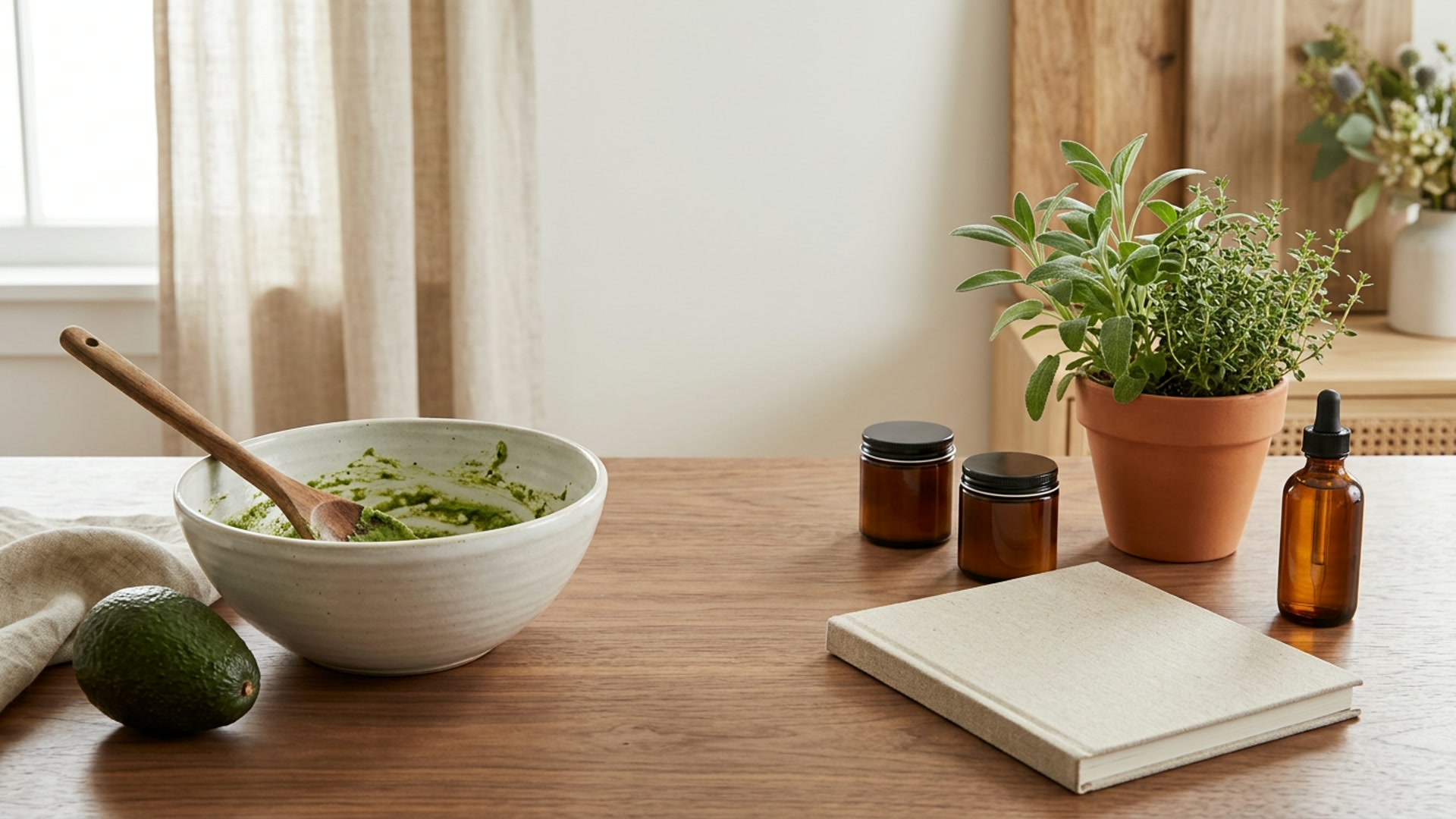
Long before I understood formulation, I was carrying avocado, olive oil, eggs, and whatever else interested me from the kitchen into the bathroom. I made face masks, hair treatments, lotions, perfumes, and mixtures my parents jokingly called potions.
They let me experiment. They also let me make a mess. I was fascinated by the simple fact that ingredients could change when I combined them, and that something I imagined could become something I could hold.
Curiosity came before expertise
I did not have the language to explain what interested me. I only knew that separate ingredients could become something new. I loved the act of making, and I wanted to keep seeing what happened when I combined what was close at hand.
Those childhood mixtures belong to memory, not instruction. I would not turn them into formulas for someone else to copy. They were messy, playful experiments made without the knowledge that responsible products require. What matters to me now is the permission I had to remain curious long enough for better questions to develop.
Commercial scale changed the questions
Years later, my work in the hemp industry brought me into commercial product development and manufacturing for ingestible and topical products. My childhood question had been, “What can these ingredients become?” Commercial work added harder questions: Can a result be repeated? Is it appropriate for its intended use? What evidence, documentation, and review does it require? Who carries responsibility when other people will use it?
That experience gave me a view of how many specialized people and systems stand behind a responsible product. Formulation, sourcing, testing, quality, documentation, and production are distinct kinds of work. A founder’s judgment matters, but it does not replace professional expertise or product-specific evidence.
Scale made the difference between curiosity and responsibility impossible to ignore. An idea can begin with one person, but a commercial product cannot depend on one person’s enthusiasm or assumptions.
The household keeps the work specific
Botanic brings the question back into ordinary home life. My role as founder is to keep asking what a product is for, whether the people developing it have the information and expertise they need, and whether the final directions and claims are clear enough for the household expected to use it.
I am still interested in transformation. I still love seeing an idea become tangible. What changed is my understanding of the work between those two points.
When I look back, I do not see a straight line from a child’s bathroom experiments to Botanic. I see the same curiosity meeting better knowledge, larger consequences, and more responsibility. The potions were where the question began. The years since have taught me to ask it with greater care.
With love and intention,
Jennifer