The Kitchen Skill I Hope We Never Lose
October 21, 2026
Above every other household skill, I hope we preserve the ability to make a real meal from basic ingredients.
I appreciate convenience. There are days when it helps a household function, and I do not believe every meal needs to prove how committed we are. But convenience should not cost us the confidence to walk into a kitchen, understand what is available, and feed ourselves or someone else.
Begin with the room, not one perfect recipe
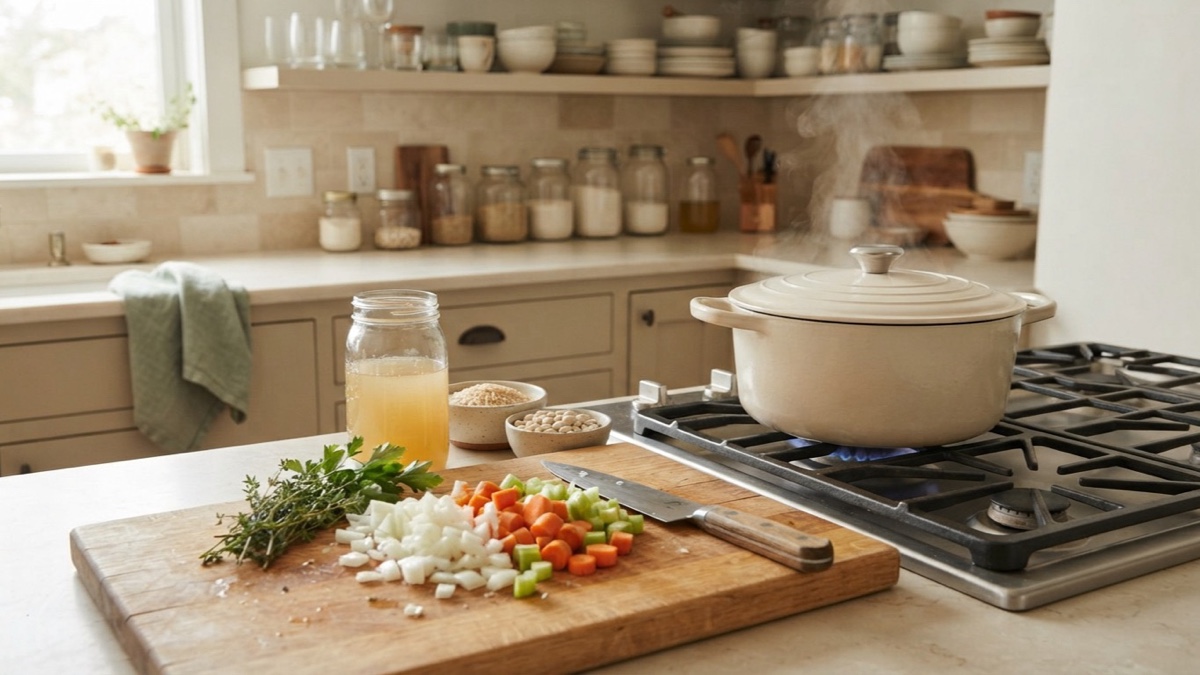
I do not think everyone must start by learning the same meal. The deeper foundation is becoming familiar with the kitchen itself.
Learn how to use the stove and oven safely. Learn how water behaves at different temperatures, how oil responds to heat, how to hold and care for a knife, and how to prepare a few basic ingredients. Learn which handles become hot, which tools need to be washed by hand, and how to recognize when food is properly cooked.
Once the room feels familiar, creativity becomes possible. A person can adapt a recipe, substitute thoughtfully, rescue a meal that is not going exactly as planned, or make something without needing every ingredient to appear in the original order.
Keep the workspace ready enough to begin
Before I cook, I like to reset the kitchen and unload the dishwasher. I do not need the room to be perfect, but I need enough clear workspace to prepare food without fighting yesterday’s unfinished tasks.
While the meal is underway, I load used dishes, wash what I still need, and wipe the work area. Cleaning as I go keeps the finished dinner from being followed by a second enormous project. It also protects the part of cooking I enjoy, because the room remains workable.
Of course, cleaning as we go does not replace proper handwashing, separation of raw ingredients, and appropriate sanitation. A calm kitchen still needs sound food-safety practices.
Competence creates flexibility
Cooking from ingredients is not only about nutrition or saving money. It is practical self-reliance. It allows a person to look at a pantry, refrigerator, garden, or small group of ingredients and imagine more than one outcome.
It also makes hospitality easier. When another person needs to be fed, confidence helps us respond without believing we need a special shopping trip or a complicated menu.
The result does not have to be impressive. Eggs, rice, beans, vegetables, bread, broth, or a few familiar seasonings can become something sustaining in the hands of someone who understands the basics.
Use convenience without surrendering confidence
Convenience foods have a useful place. The concern begins when they make the kitchen feel inaccessible without them. A skill remains alive only when it is practiced, passed on, and allowed to become ordinary.
I want people to feel at home around heat, water, tools, and ingredients. I want them to know they can start simply, learn safely, and build confidence one meal at a time.
The kitchen does not need to be perfect. It needs to be ready enough that beginning feels possible.
With love and intention,
Jennifer