
How To Recognize Furniture Worth Keeping
August 14, 2026
I am drawn to old furniture, especially antique mid-century pieces, but age alone does not make something worth keeping. The pieces John and I bring home have to be useful, structurally sound, and distinctive enough that we genuinely want to care for them.
I like nicely restored old things. Scratches and evidence of age can add charm. Neglect, instability, and damage that makes a piece unusable are different. The goal is not to erase history; it is to help a well-made object continue its life.
Start with structure
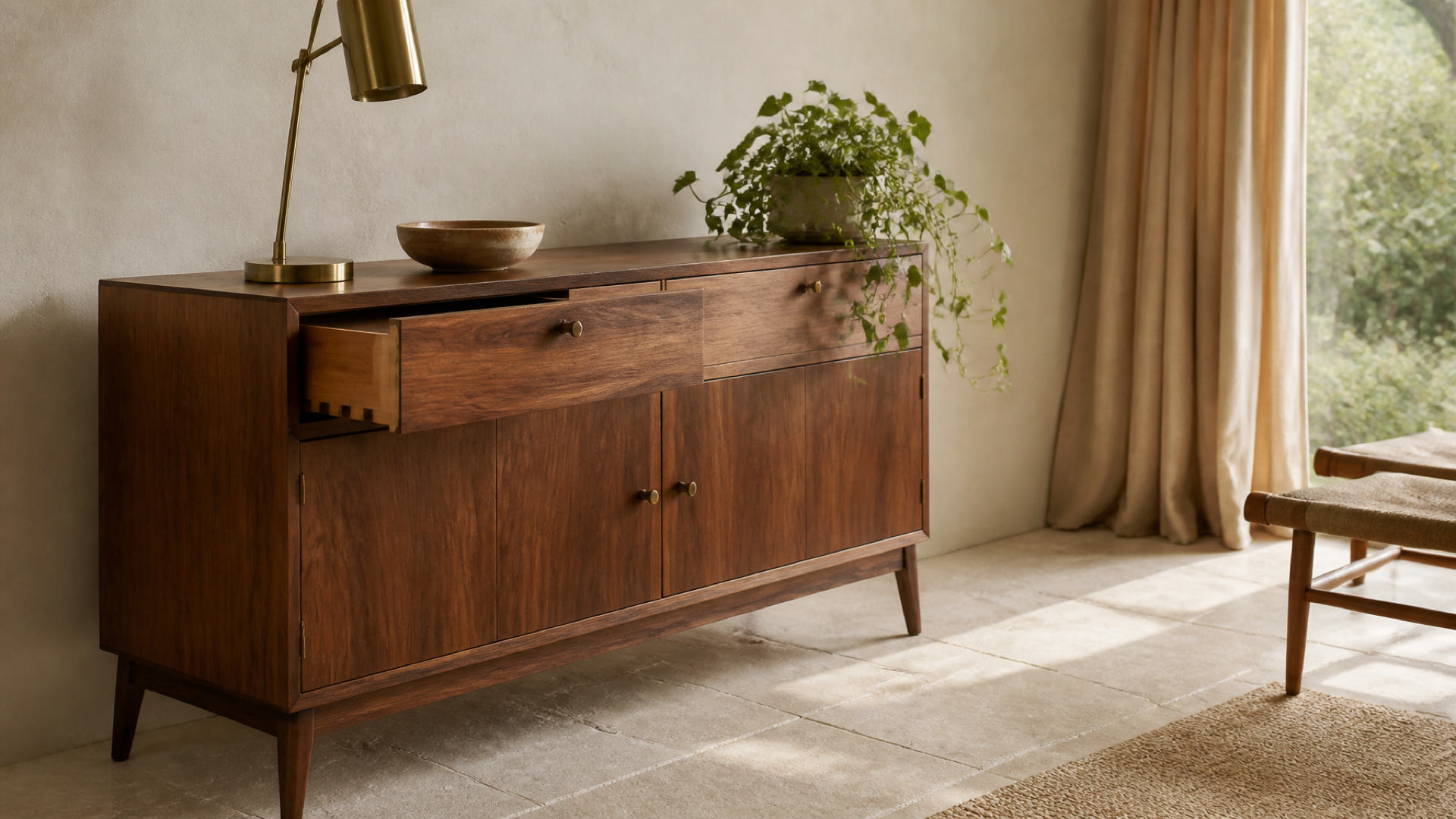
Check whether the piece stands squarely and feels stable. Open drawers and doors. Look underneath and behind it. Solid joinery, repairable construction, and materials suited to the job matter more than a fashionable finish.
Learn what is material and what is surface
Solid wood can often be repaired, but veneer is not automatically a sign of poor quality; many excellent pieces use it deliberately. Look for lifting veneer, water damage, deep cracks, strong odors, active pests, or repairs that weakened the structure. A surface can be refinished. A piece that is failing at every joint may require more work than it can reasonably return.
Before stripping an old finish or attempting a structural repair, learn what the piece is and what may be lost. Original finishes, labels, hardware, and signs of construction can carry information as well as value. When a piece may be rare, historically important, badly damaged, or coated with an unknown old finish, a furniture conservator is a wiser first call than a do-it-yourself experiment.
Notice proportion and singularity
I often fall for craftsmanship and unusual details, something I have not seen everywhere else. But a beautiful piece still has to fit the room and serve the life of the house. Measure doorways, consider scale, and decide what the piece will actually do before bringing it home.
Respect the life already in it
Our restored 1960s record-player console and John’s grandmother’s hope chest carry known histories. Other pieces simply spoke to us through their form and workmanship. Both reasons are enough.
When I restore and maintain an old piece, I feel that I am continuing its care. I like to take care of things. That is the standard beneath the aesthetic: not collecting for display, but choosing what deserves a useful place and then becoming a good steward of it.
With love and intention,
Jennifer