How Panna Maria Became Part of My Texas Story
October 19, 2026
My connection to Texas has never felt abstract. I was born here, raised here, and shaped by landscapes and communities that carry the stories of the people who came before me. On my father’s side, that story includes the Polish families who settled in Texas and the places where their language, faith, names, and family life continued across generations.
The names in my family include Lyssy, Kotzur, Gawlik, and Moczygemba. They are not simply entries on a family tree. They are part of how I understand where I come from.
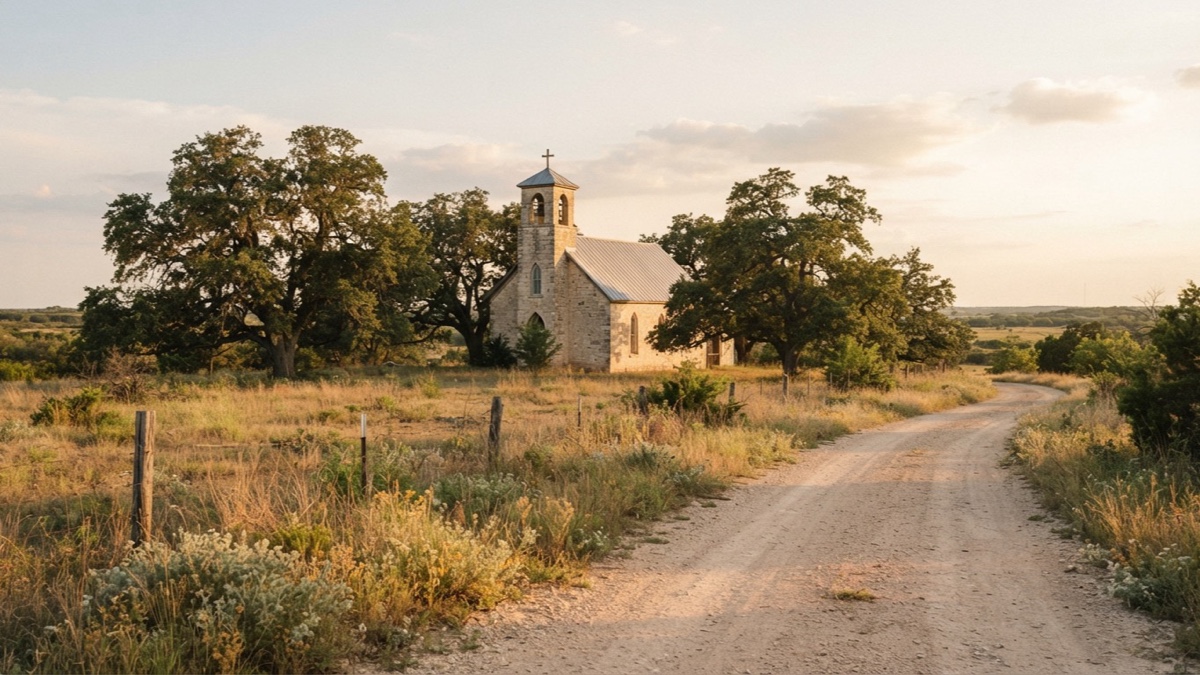
The oldest permanent Polish settlement in America
Panna Maria, in Karnes County, is widely recognized as the oldest permanent Polish settlement in the United States. Father Leopold Moczygemba encouraged families from Upper Silesia to make the difficult journey to Texas, and the founding community was established at Christmastime in 1854.
The history is not a polished origin story. The settlers faced disease, drought, crop failures, floods, isolation, unfamiliar wildlife, and deep conflict about leadership and land. They carried language, customs, faith, skills, and family networks into a landscape they had never known.
Early church records include the surnames Lyssy, Kotzur, Gawlik, and Moczygemba. Those records establish that families carrying the names were part of the early community. The exact lines connecting each historical person to my family still require careful primary-source work, and I do not want to turn family tradition into certainty where the records are incomplete.
History lived in ordinary family life
Polish-Texan history was discussed with pride throughout my family. Older relatives still spoke Polish. I remember my grandparents occasionally bickering in it. We could not understand the words, but we understood the tone and found those rare exchanges funny.
Family members taught us Polish titles, simple words, and familiar phrases. Panna Maria and McCook were recurring places connected to weddings, funerals, gatherings, and the cemetery where generations of family remain. They became what I think of as anchors of life, the physical places where belonging could be seen rather than merely explained.
That is what makes heritage real to me. It lives in language heard across a room, a surname carried forward, a photograph, a cemetery, a family joke, and a place people return to for the major passages of life.
What survives, and what changes
Families do not carry a culture across an ocean and preserve it without change. Traditions adapt to climate, available food, neighboring communities, new generations, and the practical needs of life. Some words are lost. Meanings become less certain. A remembered practice may combine an older custom with something specific to South Texas.
That does not make the inheritance less meaningful. It makes accuracy more important. We can honor family memory while admitting what we have not verified. We can continue asking questions without filling the quiet places with convenient answers.
A history still being gathered
The Polish Heritage Center at Panna Maria now preserves records, photographs, heirlooms, recipes, oral histories, and stories so descendants and the public can encounter this history in a dedicated place. I value that work because family history is easily scattered when the people who remember it are gone.
For me, Panna Maria is part of a larger Texas story and a deeply personal one. It reminds me that belonging can travel, adapt, and take root without forgetting every name that carried it forward.
With love and intention,
Jennifer