
November 19, 2026
A full sink is a bad place to wash delicate glassware. There is too much competing for the same small space, and one hard tap against a plate or faucet can turn a simple cleanup into broken glass. The answer is not to balance everything more carefully. It is to make the washing area smaller and calmer.
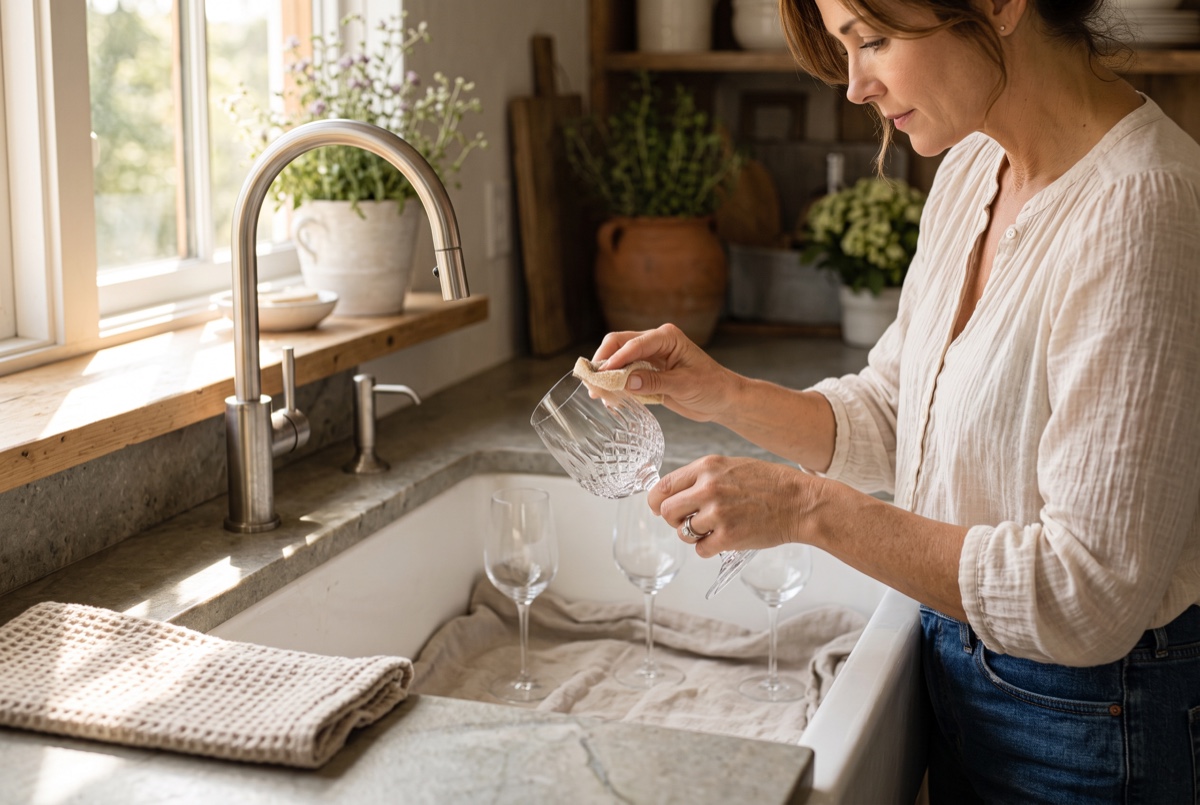
Clear a temporary landing place
Start with the counter, not the glasses. Move food scraps, utensils, and anything that can wait to a tray or a designated holding spot. Lay a folded, clean towel on a stable section of counter. This is where each washed glass will drain. Keep it away from the edge, and do not place it on top of an appliance that may warm during use.
You do not need a spotless kitchen to wash glassware safely. You need one protected surface and enough room to set down one piece at a time.
Use a basin if the sink cannot be made safe
A plastic dishpan, a clean mixing bowl, or another roomy container can serve as a small wash basin. Set it on a towel so it cannot slide. Fill it with warm water and a modest amount of dish soap. The water should be comfortable to the touch, not scalding. Very hot water poured into cool glass can create a sudden temperature change, which is one reason glass breaks.
If the vessel is valuable, antique, hand-painted, cracked, or otherwise uncertain, check its care guidance before washing. Some pieces are better hand dried or handled by a specialist. Never put a visibly damaged glass back into service simply because it survived one more wash.
Wash the least dirty pieces first
Work from cleanest to messiest. A water glass with only a little residue can go before a glass coated with butter, gravy, or lipstick. This keeps the wash water usable longer and reduces the temptation to scrub hard.
- Hold the bowl of the glass, not the stem, while washing.
- Support the outside with a soft sponge or cloth.
- Use a narrow brush only when it fits without forcing the glass.
- Do not twist the bowl and stem in opposite directions.
- Rinse with warm running water or a separate basin of clean water.
The stem is not a handle. It is a vulnerable joint. Keeping your grip on the bowl gives you more control and prevents pressure from concentrating at the narrowest point.
Let gravity do the drying
Place washed glasses upside down only if the towel and the rim can support them without wobbling. For very delicate stems, set the glass upright on the towel so air can circulate through the bowl. A clean, lint-free cloth can remove drops from the outside, but avoid pushing a cloth deep into a narrow glass. The pressure needed to pull it out can be more dangerous than the water you were trying to remove.
Give the pieces room. Crowding wet glasses together defeats the careful washing setup. If you have more than one batch, change the water when it becomes cloudy or greasy and keep the clean pieces separate from the unwashed ones.
What to do with the full sink
Leave the main sink for sturdy items if that is what makes the situation manageable. Scrape food into the trash or compost according to your household system, soak cookware that needs time, and wash ordinary dishes in a separate sequence. A full sink is a scheduling problem, not an instruction to use more force.
When the glasses are dry, return them to storage by the bowl rather than lifting them by the stem. The safest holiday cleanup is often the one that gives fragile things their own small process.
With care,
Hazel