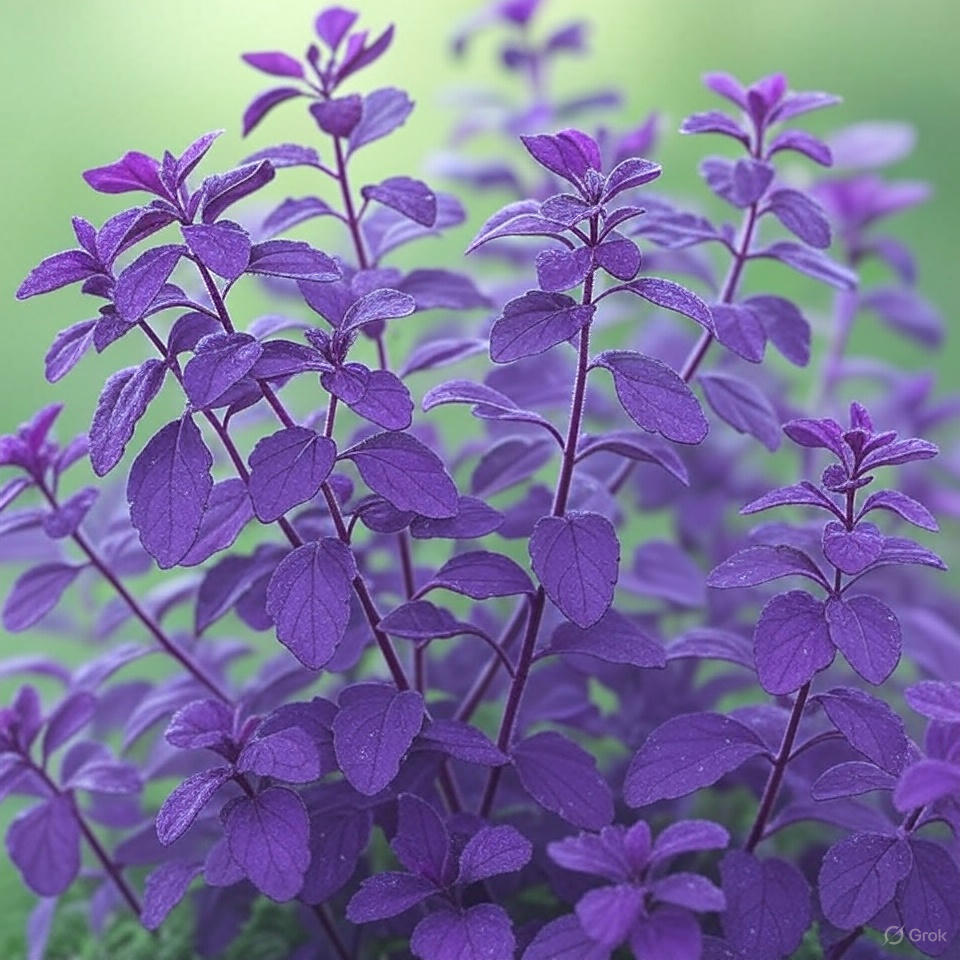
Purple Tulsi, also known as Holy Basil or Ocimum sanctum, has been cherished for centuries in Ayurvedic tradition. With its striking purple leaves, warm aroma, and long-standing cultural significance, it remains one of the most respected herbs in plant-based wellness.
What Makes Purple Tulsi Special?
Purple Tulsi is often described as an adaptogenic herb, meaning it is traditionally used to help the body adapt to stress and maintain balance. Its peppery, clove-like profile and rich antioxidant content have made it a favorite in both traditional and modern wellness practices.
Common Uses of Purple Tulsi
- Tinctures: Concentrated liquid extracts that are easy to add to water or tea.
- Capsules: A convenient format for daily wellness routines.
- Tablets: A portable and precise way to include Tulsi in a supplement routine.
- Topicals: Used in creams and balms for soothing botanical skincare.
- Functional beverages: Often enjoyed in teas and wellness drinks for their aromatic profile.
- Edibles: Included in gummies or wellness-forward snacks.
- Bakeables: Can be incorporated into bars, cookies, and similar recipes.
- Smokeables: Sometimes used in herbal smoking blends for a calming aromatic experience.
Interesting Facts
- Sacred symbolism: In Hindu tradition, Tulsi is often associated with protection and purity.
- Global reach: Though rooted in India, Tulsi has become widely recognized in herbal practices around the world.
- Aromatic character: Its warm scent comes partly from eugenol, the same compound associated with cloves.
- Garden favorite: Purple Tulsi is also appreciated for its beauty and fragrance in home gardens.
Purple Tulsi continues to stand out as a herb that brings together heritage, aroma, and daily wellness versatility.
Note: Always consult with a qualified medical professional for personalized advice. Our products are designed to complement a balanced wellness lifestyle.