Cleaning, Sanitizing, and Disinfecting Are Not the Same
July 23, 2026
These three words are often used as if they mean the same thing, but they describe different processes. Using them accurately helps prevent both overpromising and unnecessary work.
Cleaning removes soil and impurities
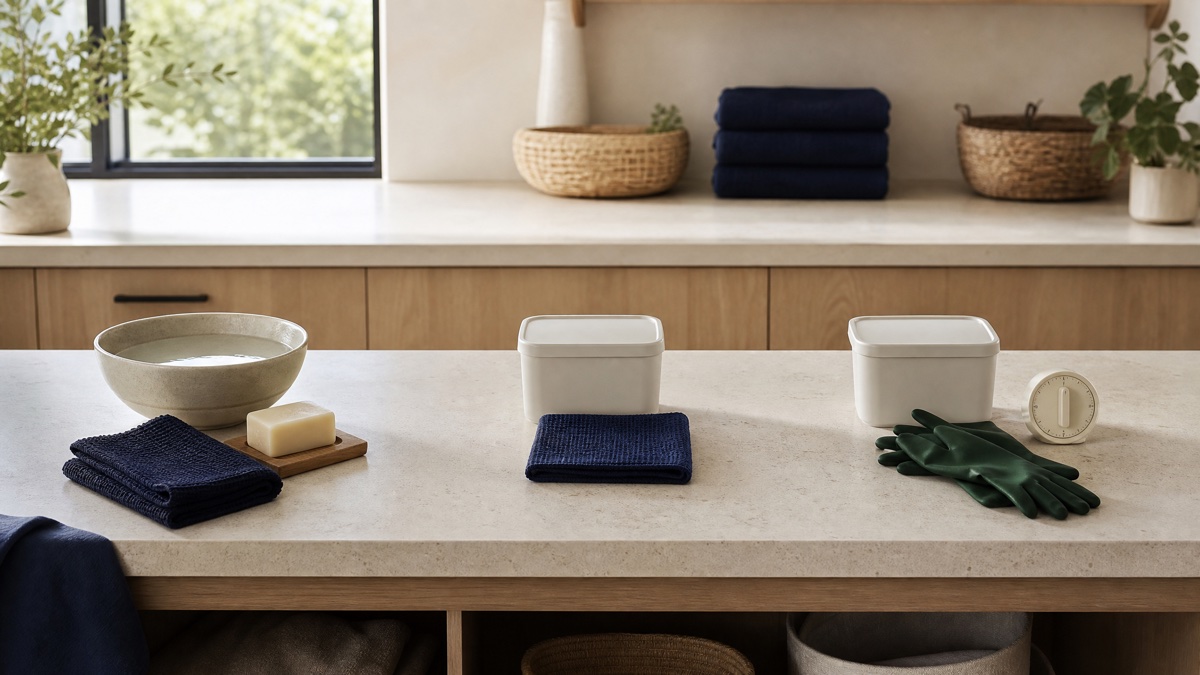
Cleaning uses water, soap or detergent, and physical action to remove dirt, residue, and many germs from a surface. The CDC explains that regular cleaning is enough in many ordinary household situations.
Sanitizing reduces germs to a defined level
Sanitizing is a separate step performed with a product labeled for sanitizing. The surface should be cleaned first, and the sanitizer’s label controls where it may be used, how it is applied, and how long it must remain on the surface.
Disinfecting kills specified germs
Disinfecting uses an EPA-registered disinfectant or another appropriately labeled product. It may be appropriate when someone is sick or when household circumstances call for additional germ control. The surface must be cleaned first unless the product label explicitly says otherwise.
The label is part of the method
For sanitizing and disinfecting, contact time matters: the surface generally needs to remain visibly wet for the full time stated on the label. Ventilation, protective equipment, rinsing, and surface compatibility may also be required. Never mix products or chemicals.
Choose the process that matches the situation
- Routine soil: clean the surface and stop when it is clean.
- A defined sanitizing need: clean first, then use a product whose label specifically supports sanitizing that surface and follow the full label directions.
- A defined disinfecting need: clean first unless the label says otherwise, then use an appropriately labeled disinfectant for the stated purpose.
For a product-by-job overview, see Which Botanic Cleanser Fits This Job?. The product category and the label always outrank a general household shortcut.
Botanic household cleansers should be described according to their current product listings. Unless a product is specifically registered and labeled for sanitizing or disinfecting, use the accurate word: cleaner.
A cornerstone decision guide
For most ordinary household soil, start with cleaning. The CDC explains that cleaning removes dirt, residue, and many germs from surfaces, while sanitizing and disinfecting are additional processes used for more specific purposes.
Ask three questions before choosing the stronger word or process:
- What is on the surface? Food residue, dust, grease, and mineral film are cleaning problems unless the situation calls for something more.
- Why is additional germ control needed? The household circumstances should determine whether sanitizing or disinfecting is relevant, not the appeal of a stronger-sounding label.
- What does the product label authorize? The exact surface, organism claim, dilution, application method, wet contact time, ventilation, protective equipment, and rinsing requirements all come from the label.
An EPA-registered disinfectant is not interchangeable with an ordinary cleanser. The EPA’s disinfectant guidance explains why registration and directions for use matter. If a Botanic product is presented as a cleaner, keep calling it a cleaner unless its current label specifically supports another use.
Never mix products to create a stronger process. If the label, surface, or household situation is unclear, pause and obtain the missing information.
With care,
Hazel