
Unexpected Hospitality Starts With What Is Already Here
October 11, 2026
When someone arrives hungry and I was not expecting to feed them, I do not believe the answer has to be an emergency trip to the store.
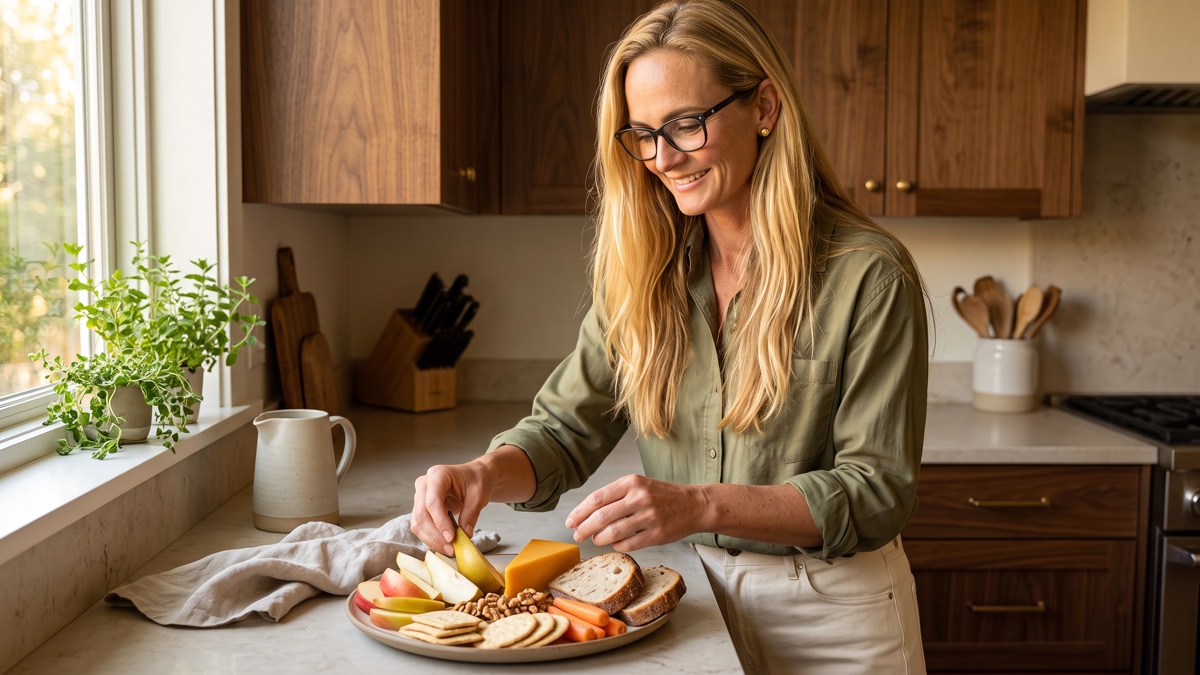
I look at what is already in the house. Usually there is some combination of cheese, crackers, fruit, vegetables, nuts, or bread John has made. There may be cookies or homemade ice cream. None of it has to become an elaborate menu. It only needs to become an honest offer.
Begin with enough, not impressive
Unexpected hospitality can expose the belief that welcome must look abundant. We imagine a full table, a planned recipe, or food chosen specifically for the occasion. When those things are not available, it is easy to apologize for what we have before anyone has even tasted it.
I would rather gather a few real things and offer them warmly. Slice the fruit. Put the crackers and cheese on a plate. Add nuts, vegetables, or bread if they are there. A simple assortment becomes a meal because people sit down and share it.
Attention does more than abundance. A real plate and one thoughtful finishing touch can communicate care without turning a surprise visit into a performance.
Keep ingredients that can become more than one thing
Our household generally begins with ingredients rather than a rigid meal plan for every possibility. That makes everyday cooking more flexible, and it also helps when another person needs to be fed. Fruit can be set out as it is. Vegetables can be cut. Cheese, bread, crackers, and nuts can move from separate shelves to one shared plate.
This is one reason I value cooking confidence. When the kitchen feels familiar, you do not need the exact right recipe to respond. You can look at what is available, understand how the pieces work together, and make something generous without panic.
The welcome is the important part
A person may remember that the bread was good or that there were cookies afterward. More often, they remember whether they felt like an inconvenience.
Hospitality is not measured by how quickly we can produce more. It is measured by whether we can make room with what we have. That may mean a small snack, a glass of iced tea, and a place at the kitchen island. It may mean saying honestly, “This is what is here, and I would love to share it with you.”
The food does not have to disguise the ordinary nature of the day. In fact, sharing the ordinary may be what allows someone to feel genuinely included.
A practical invitation
If unexpected hospitality makes you anxious, begin by noticing five things you usually have available that can be served without much preparation. They do not need to match my list. Choose the foods that reflect your household, budget, culture, dietary needs, and actual habits.
Then keep one simple serving plate or board easy to reach. Not because presentation matters more than people, but because removing friction helps generosity become easier.
Unexpected hospitality begins before the table is full. It begins when we decide that what is already here can be offered with care.
With love and intention,
Jennifer